Product Overview
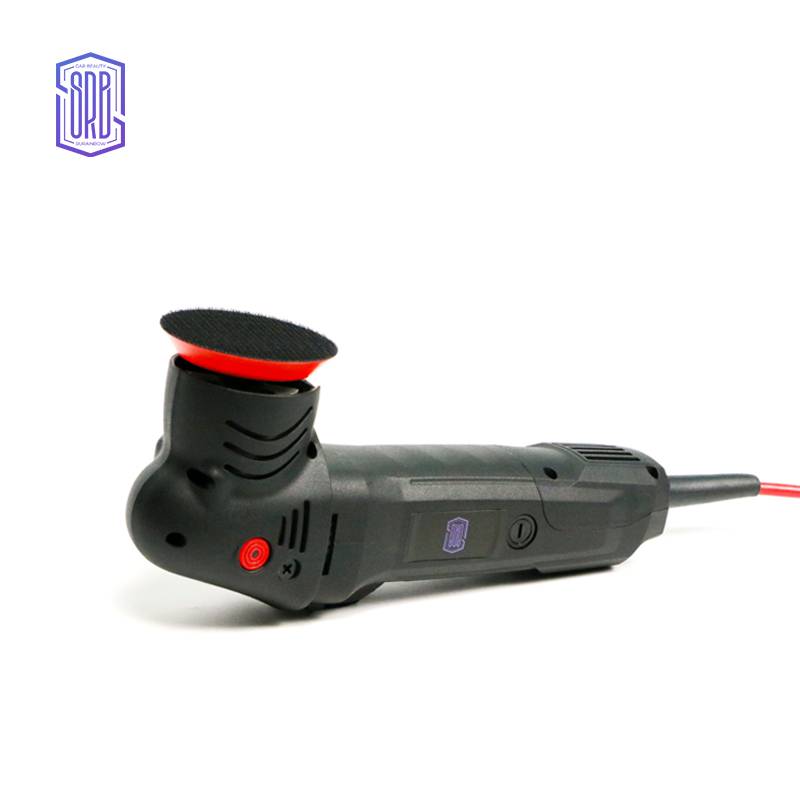
It earns its place where a polishing compound for car scratches has to be worked into a small area instead of spread across a whole door. Behind it is SURAINBOW, the detailing supply brand run by Guangzhou Liangdian Automotive Supplies Co., Ltd. since 2010 and one of the car cleaning products manufacturers working out of Guangzhou's Baiyun District.
Key Features
- Pad coverage that stays inside the repair.
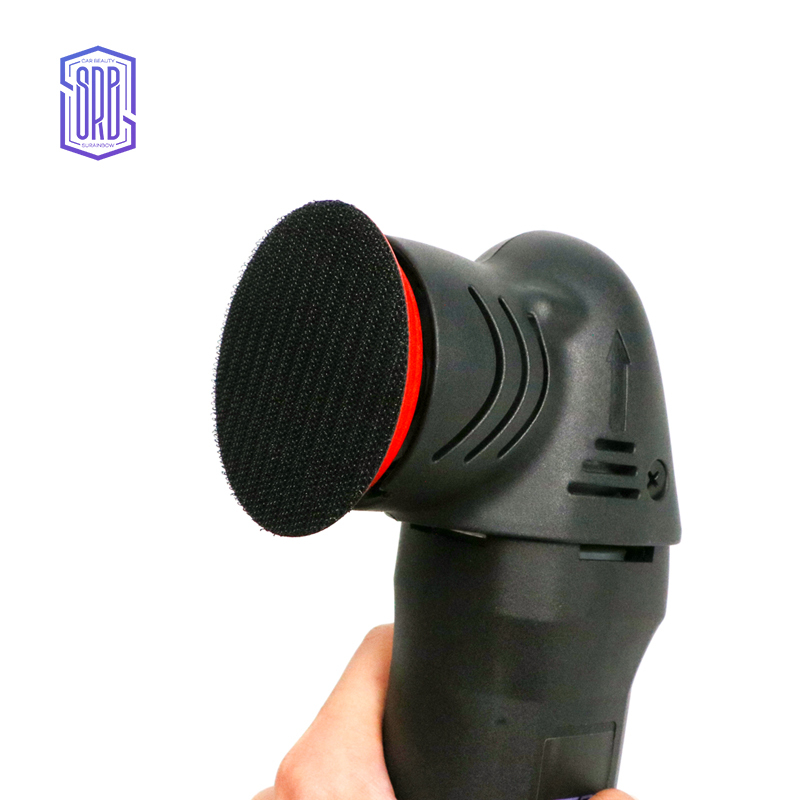
- The backing pad and the smaller pads it accepts keep the work inside the damaged area, so car polishing compounds are worked where they are needed instead of across the whole panel.
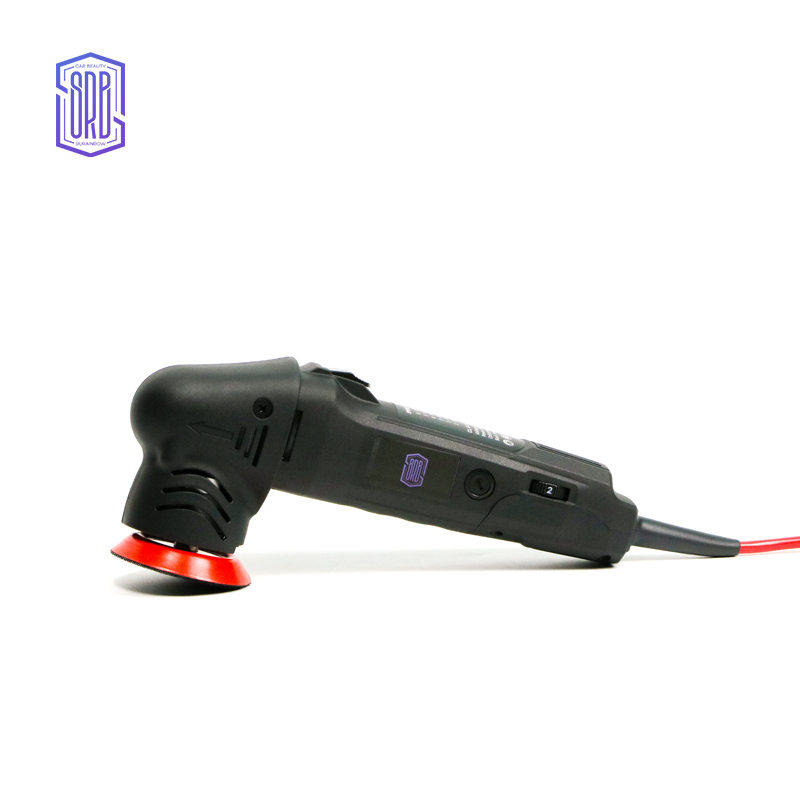
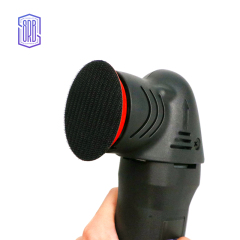
- Light, compact body.
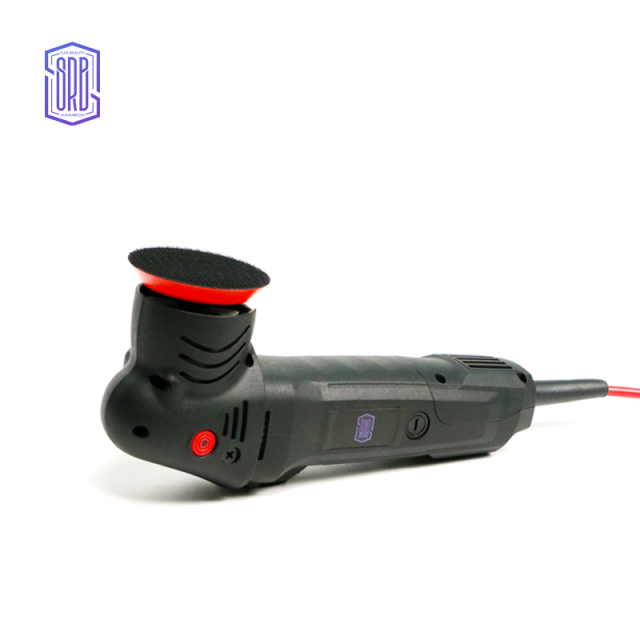
- Easy to hold at an awkward angle — up inside a wheel arch or under a mirror — without resting the machine on the paint for support.
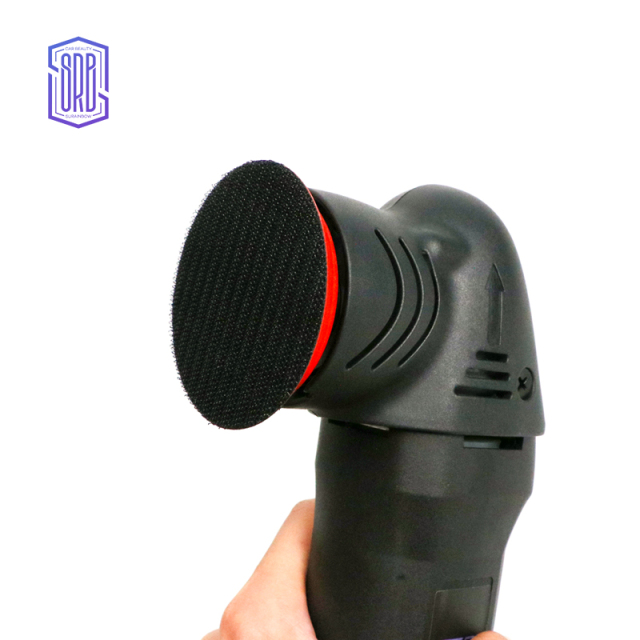
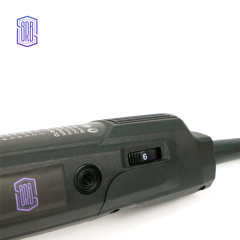
- Vented housing and moulded grip.
- Air moves through the motor housing while the textured grip keeps the hand steady when the machine is turned along a pillar or the lip of an arch.
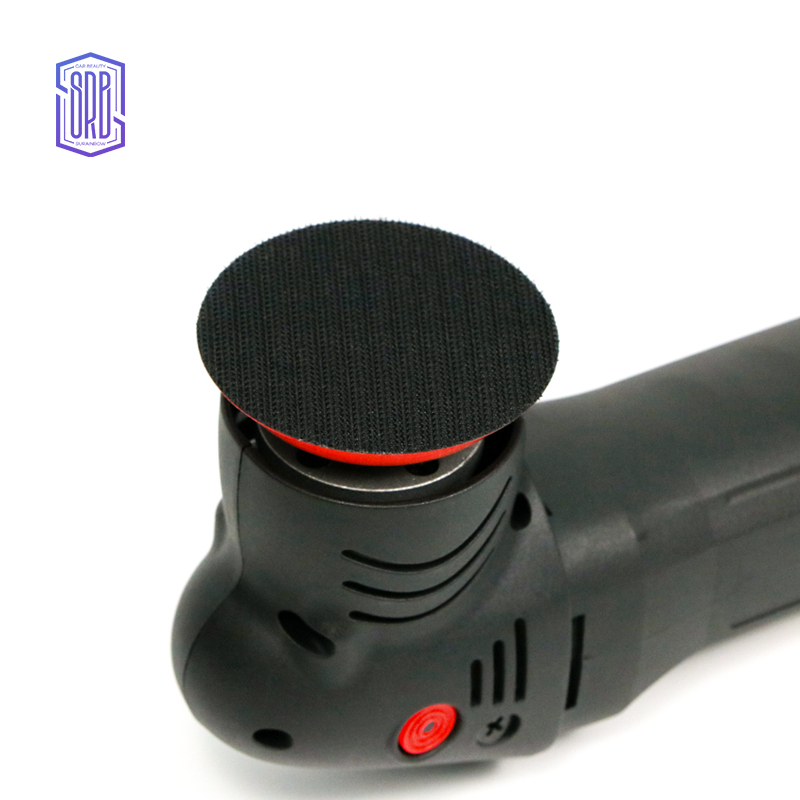
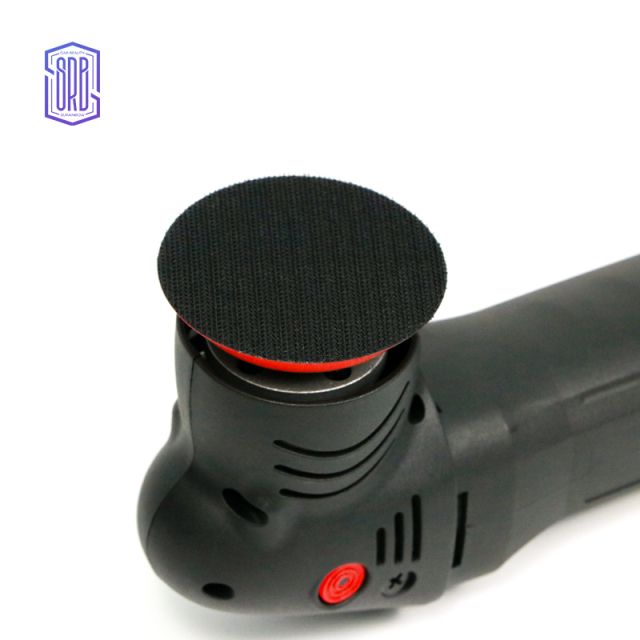
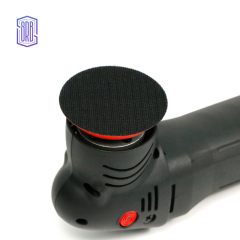
- Hook-and-loop backing pad.
- Pads go on and come off in seconds, so one machine can run a cutting pad, a finishing pad and a small edge pad inside the same job.
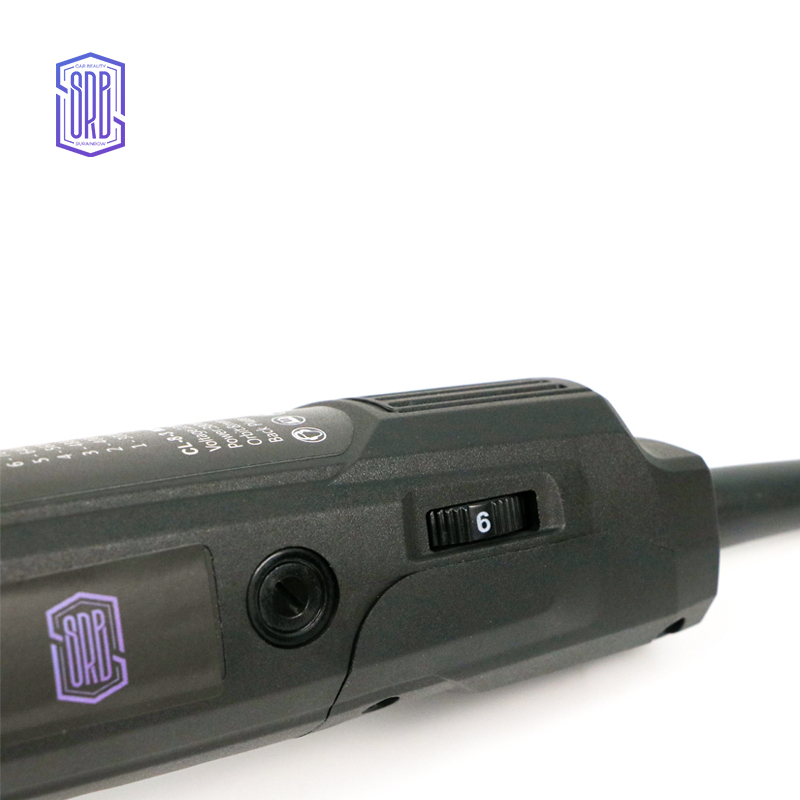
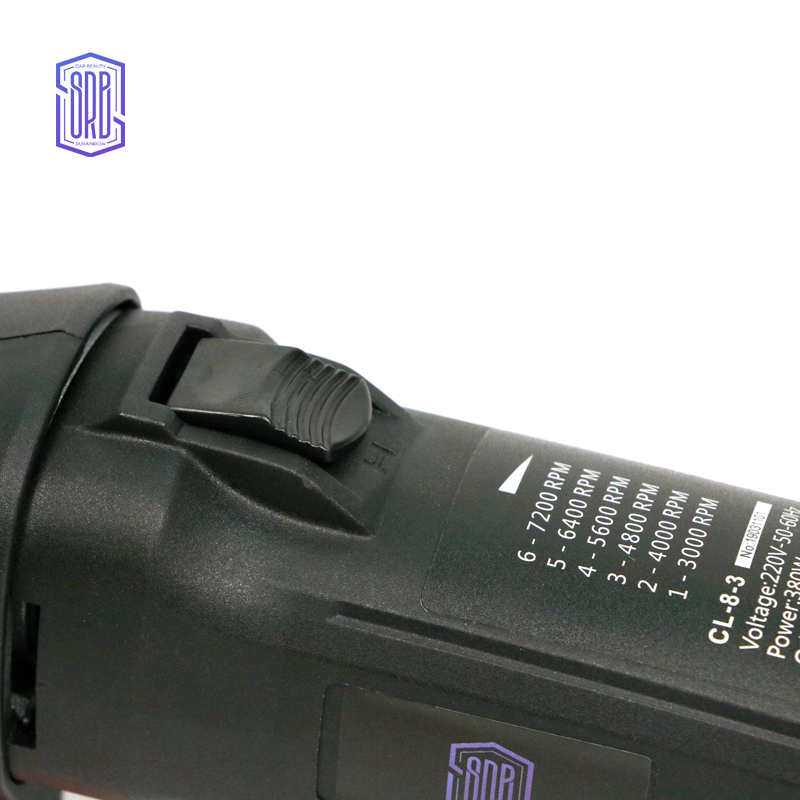
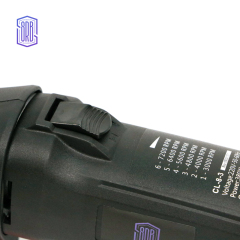
- Rating label on the housing.
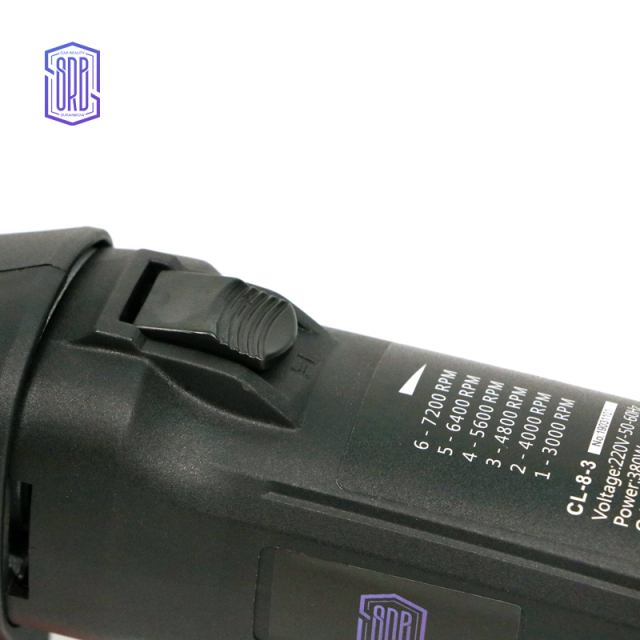
- The label carries the model, voltage and power for your market file.
Pad Fit & Speed Control
Pad size is the first decision, not the last. A 1 inch pad suits badge surrounds, pillar edges and the tight return at the bottom of a bumper; a 2 inch pad covers mirror caps, arch lips and door shuts; the 3 inch size handles small blend areas where the repair runs a little wider. One backing plate takes all three, so a single machine covers the whole set.
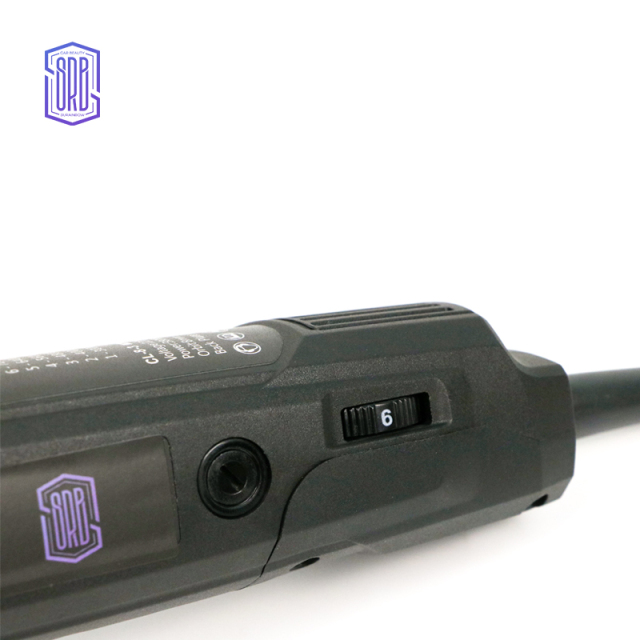
The dial runs from 1000 to 3500 rpm and is meant to be used across that range rather than parked at one setting. Spread the car polish at the bottom, cut in the middle, then come back down to finish — the higher end is for defect removal where the paint can take it, not for the last pass.
Plastic trim, sharp edges and painted bumper corners heat up quickly under a small pad, because the same pressure sits on a much smaller area. A car paint polishing compound worked at the top of the range on a bumper corner needs the machine kept moving and the pad kept flat; tape anything sharp before the pad reaches it.
A loaded pad stops cutting, which is often mistaken for a weak machine. Brush the face out between passes, change pads rather than adding more compound, and keep separate pads for different car polishing compounds so one job's residue does not end up on the next car.
This is a rotary, so it corrects quickly and leaves no room for holding the pad on one spot. Keep the machine off sharp body lines, never tip it onto its edge, and lift it off the panel before stopping the motor.
Applications
- Pillars and door shuts.
- The strip between the front and rear door is too narrow for a 5 inch pad; a 2 or 3 inch pad works the whole area without touching glass or seals.
- Bumper corners and arch lips.
- The curved returns at each corner of a bumper take a 1 or 2 inch pad, and the arch lip takes a small pad held flat at a shallow angle.
- Mirror caps, spoiler edges and badge surrounds.
- Small, awkward and often plastic, these are the places where car polishing compounds are usually worked by hand — the machine does it faster and more evenly at low speed.
- Smart repair and trade-in prep.
- Mobile detailers and dealership prep teams use it to correct one panel on a car that is not being fully polished, which is exactly the job a full-size rotary makes expensive.
- Pre-coating prep.
- Before a coating goes on, the tight areas still need polishing with the same car polishing compound used on the rest of the car; this machine reaches them without re-masking the whole vehicle.
- A second machine in a busy bay.
- Shops that already run a large rotary add this one so tight work does not queue behind the big machine — and distributors stock it as the compact entry that completes a car care products range.
Working Sequence
- Tape and clean the area.
- Wipe the panel down and tape the edges, badges and trim around the repair so the pad never catches a sharp edge at speed.
- Fit the pad to the backing plate.
- Press a 1, 2 or 3 inch pad onto the hook-and-loop backing pad, matching the pad to the size of the repair rather than to the machine's maximum.
- Prime the pad with a small amount of compound.
- Three or four dots of polishing compound for car scratches across the face are enough for a tight area; overload the pad and it stops cutting evenly.
- Spread at the low end of the range.
- Start near 1000 rpm with the machine flat, work the car polish over the repair in overlapping passes, then stop and look before adding speed.
- Wipe off and inspect under a light.
- Remove residue with a clean microfiber, check the area from two angles under a bright light, and only then decide whether the panel needs another pass.
Specifications
| Model | T-330 |
|---|
| Type | Mini rotary car polisher |
| Power | 380 W |
| Voltage | 220 V |
| No-load speed | 1000–3500 rpm |
| Disc diameter | 3 inch backing pad, 1–3 inch pads |
| Pad fitting | Hook-and-loop |
| Colour | Black |
| Weight | 2.7 kg |
| Machine size | 33 × 15 × 15 cm |
| Certification stated | CE / GS / EMC |
| Brand | SURAINBOW |
| Place of origin | Guangdong, China |
Sampling, Documents & After-Sales
- Send the brief.
- Give the quantity, the voltage and plug configuration for your market, and tell us whether your own label goes on the housing or the carton.
- List the pads and compounds you intend to run, so the offer comes back as one list from a car wax manufacturer rather than as separate items to chase.
- Sample, test and approve.
- Take a unit into your own bay, run it with your own pads and compounds, and record the conditions and the result you are willing to accept.
- If you already buy from other car care products manufacturers, send their spec sheet alongside so the comparison is like for like.
- Seal the approved unit as the reference.
- Keep the approved machine, its voltage and its pad set as the acceptance reference, so later production is checked against the same baseline rather than against memory.
- Approve the packaging and artwork.
- Carton marks, label text, the manual and your logo are proofed and signed off before the run starts, so the packaging matches the market the machine is going to.
- The commercial invoice, packing list and customs papers travel with the order, together with the compliance paperwork for the model.
- Keep the batch reference.
- Report any problem with the order reference, the batch details and photos so it can be checked against the approved unit — that record is what makes traceability and after-sales follow-up possible months later.
Ordering & Delivery
| Minimum order | 2 pcs |
| Selling unit | Single unit |
| Packing | 1 pc per carton |
| Carton size | 35 × 15 × 15 cm |
| Gross weight | 2.7 kg per unit |
| Availability | In stock and fast shipping |
| Warranty support | Offered on this model; scope confirmed with your sales contact |
| Payment terms | Confirmed with your sales contact |
| Shipping method | Confirmed with your sales contact |
| Lead time | Confirmed with your sales contact |
Scale & Supply Capability
SURAINBOW is run by Guangzhou Liangdian Automotive Supplies Co., Ltd., a factory-trade operation set up in Guangzhou in 2010 and now 50 people strong. Sixteen years in car care products have given us a one-stop supply position: our own SURAINBOW lines are held in stock for fast shipping, and an associate factory with modern production equipment and an established quality management system keeps replenishment moving. We take OEM and ODM work and our R&D team develops to your specification. Buyers in the Middle East, the United States, Southeast Asia, Europe, the UK, Russia, Africa and Australia already order from us.
FAQ
What pads does this machine take, and how do I change them?
It runs pads from 1 to 3 inch on a 3 inch hook-and-loop backing pad, so a firm cutting pad for a polishing compound for car scratches and a softer finishing pad can both be used on the same machine. Pads press straight on and peel straight off, which takes seconds between panels and lets you drop to a 1 inch pad for edges without changing tools.
Can I use it on plastic bumpers and trim?
Yes, with the speed kept low and the machine kept moving. Plastic holds heat faster than steel or aluminium and a small pad concentrates the friction, so tape the edges of the repair, work at the bottom of the 1000–3500 rpm range and lift the pad off before stopping the motor.
Will this machine polish a whole car on its own?
It is built for the areas a large pad cannot reach — pillars, arch lips, mirror caps and bumper corners — and that is where it saves the most time. A full car polish pass across doors, bonnets and roofs is faster with a 5–6 inch machine, which is why most bays run the two together.
What voltage does it run on?
The machine is listed at 220 V. If your market runs on a different supply or needs a particular plug type, confirm the configuration with your sales contact before the order is placed so the units match what you are going to sell.
What should I check when the machine arrives?
Check the carton against the packing list, then look at the rating label for the model, voltage and power. Seat the backing pad fully, check that the vents are clear and the cord is undamaged, and let the machine run briefly without load to confirm the dial moves smoothly through the range.
How should the machine be looked after between jobs?
Peel the pad off the backing plate after each job, brush out the face and let it dry flat rather than on the plate. Blow dust out of the vents, wipe the housing with a damp cloth, and coil the cord loosely instead of wrapping it around the body.