Product Overview
The disc takes a 5 or 6 inch pad — the size most bays reach for when a whole panel, not a spot, has to be corrected. Detailing studios, dealership prep bays and car wash operators buy a machine of this size for the bulk of a correction job: bonnets, roofs, doors, tailgates and van side panels. It earns its place beside the car care products a shop already reorders every month, for the same reason — a repeatable finish across a high volume of cars, delivered by whoever is holding the tool that day. It is built to run with the compound you already use. Fit a cutting pad and a car polishing compound when a panel has defects to remove, then change to a finishing pad for the gloss pass; the same body, pad fitting and speed range carry both stages, so a bay does not need a second machine to finish what it started. The range covers the whole step, which is why a car wax manufacturer also supplies polishing machines: compound, pads, machine and the protection that follows all sit in one catalogue, so a distributor weighing up car cleaning products manufacturers can set up a complete bay from a single supplier.
Key Features
- 1000W motor that holds speed under load — enough output to keep the pad turning when you lean into a defect, rather than stalling and leaving a stop mark on the panel.
- Runs on the car polish you already stock — the pad fitting and the speed range suit whatever car paint polishing compound a bay already buys, so the machine does not arrive with a shopping list attached.
- Standard car care supplies — 5 and 6 inch pads and backing plates are sizes a detailing bay already keeps on the shelf, so there is no proprietary consumable to chase.
Pad Size & Panel Coverage
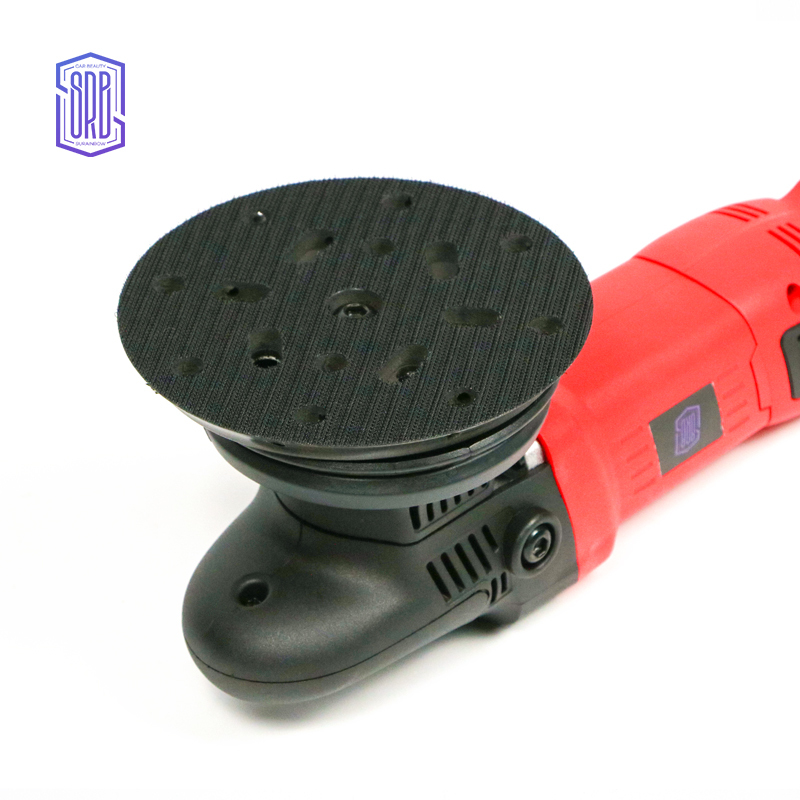
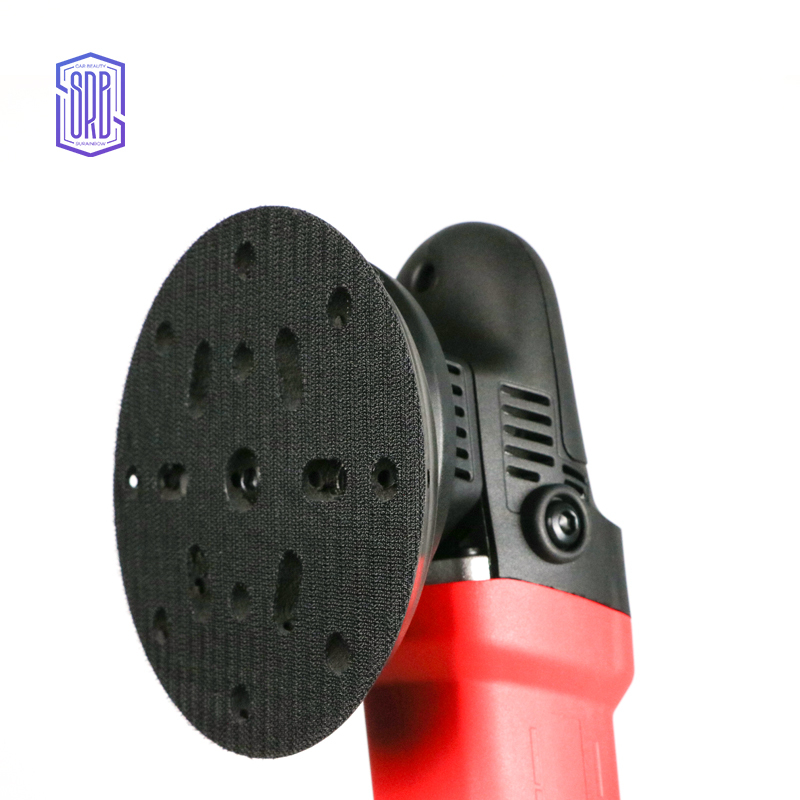
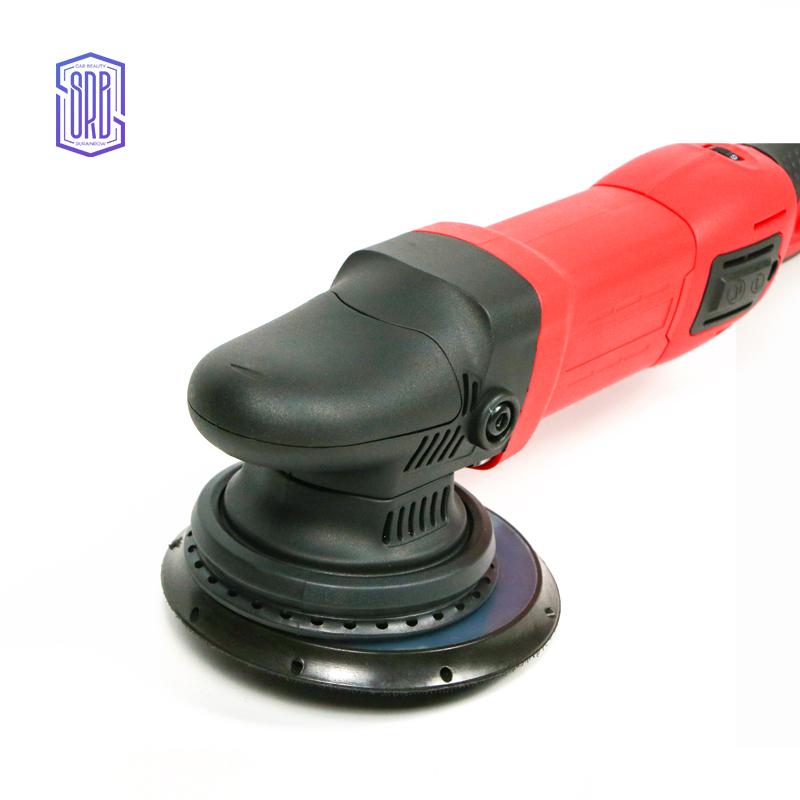
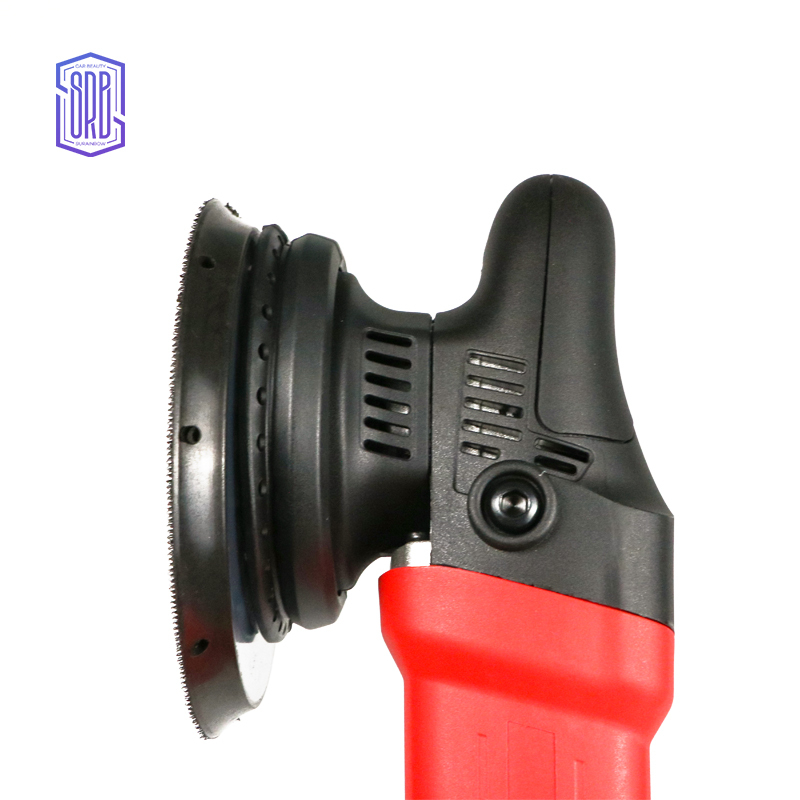
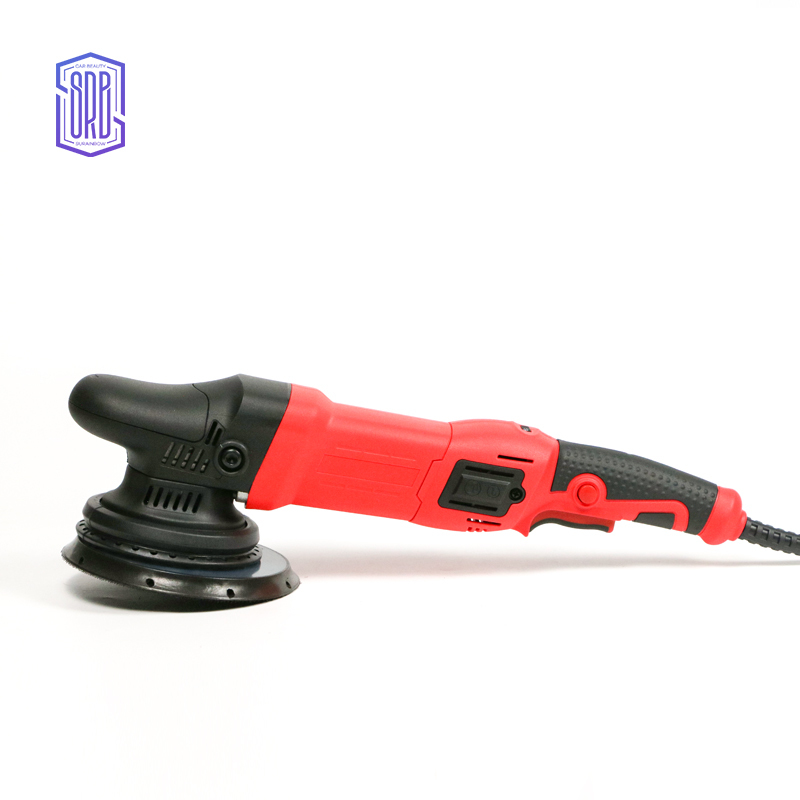
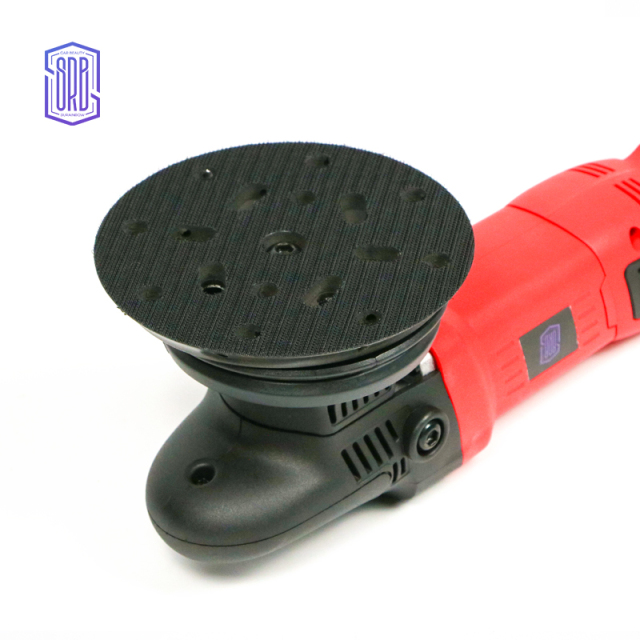
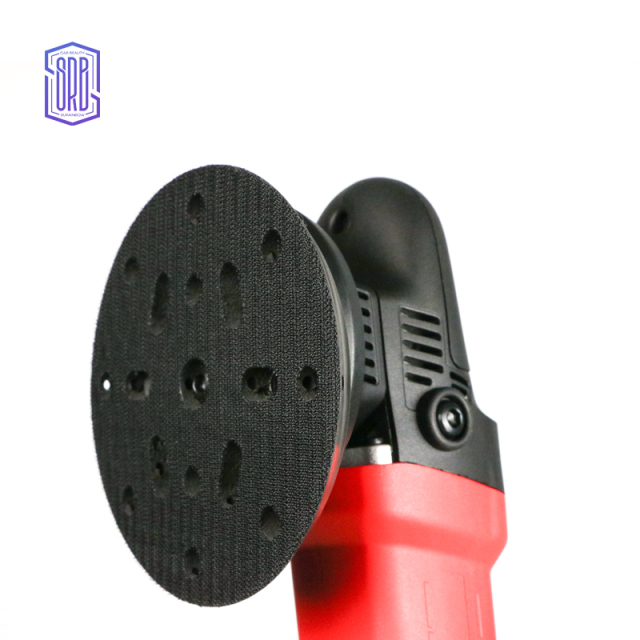
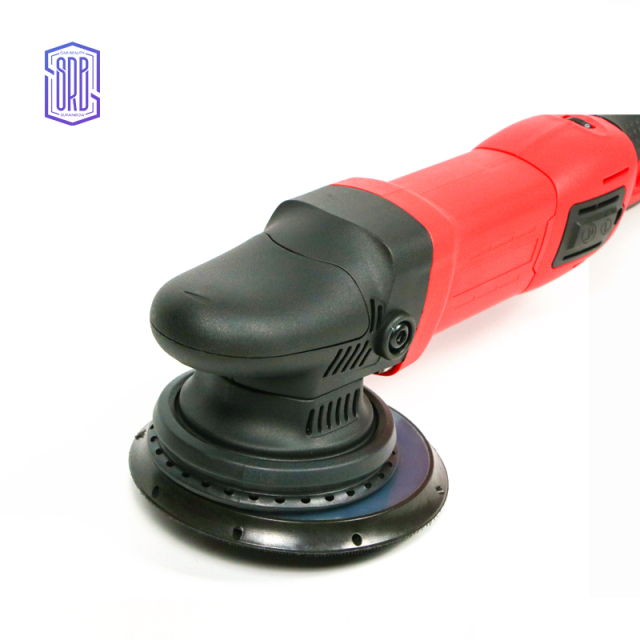
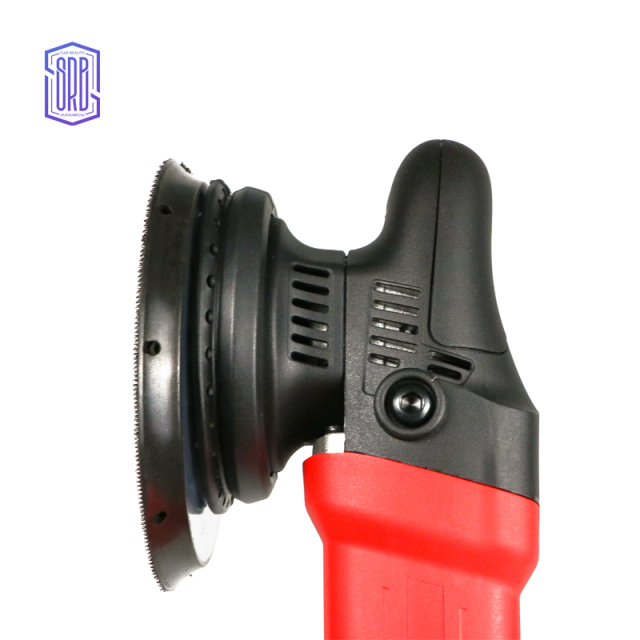
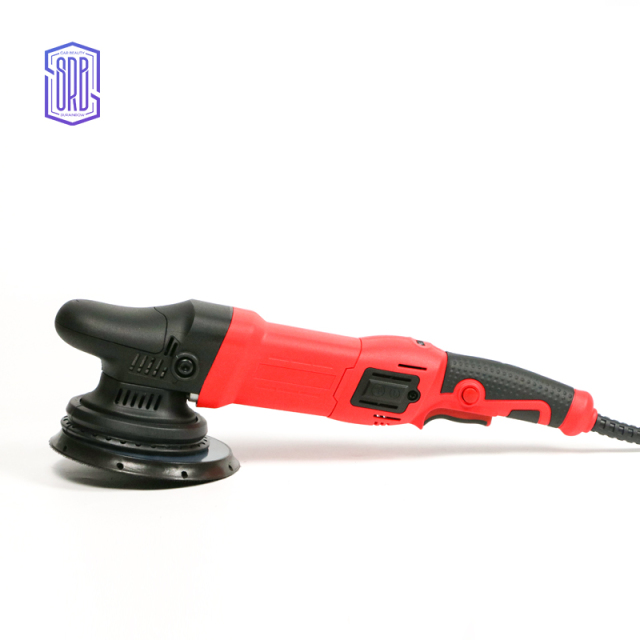
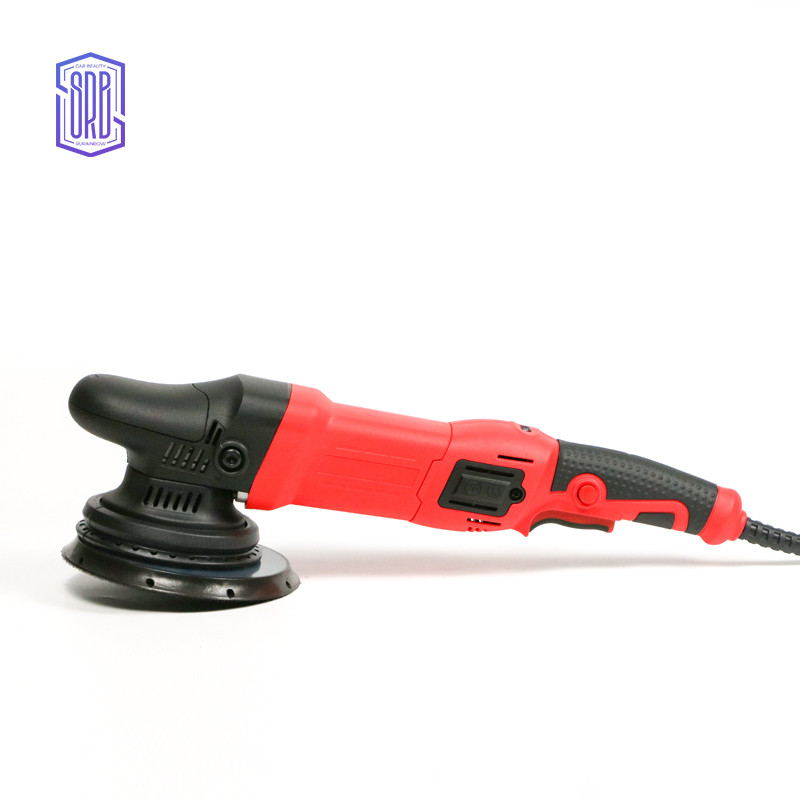
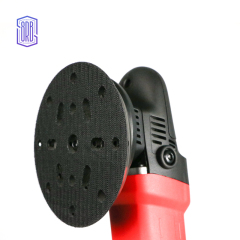
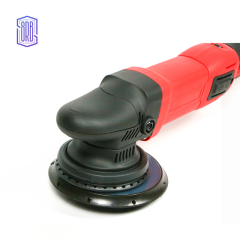
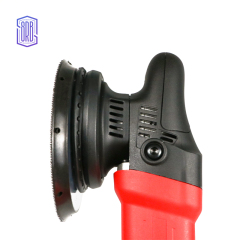
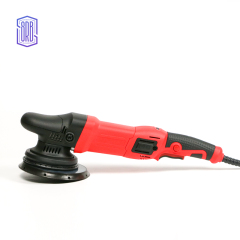
A 6 inch pad covers a wide strip on a bonnet, roof or door and keeps the passes even through the middle of the panel; drop to a 5 inch pad on the same machine and the contact patch narrows, which is exactly what you want where a panel is crowned or a body line runs through it. The body carries a perforated backing pad, a vented head and a rear grip with the cord entering behind it, so the tool sits flat and stays cool through a long session. Pad choice also changes how the compound behaves. A car paint polishing compound that cuts cleanly through a flat door on a 6 inch pad will feel different on a 5 inch pad worked around a curved wing, because the smaller patch concentrates the same downward pressure into a tighter area. On a typical car that means the bonnet and roof are worked in overlapping passes and each door is split into an upper and a lower section, so the pad stays flat through the middle of the panel instead of tipping over an edge or a swage line. Shops that run this pattern keep the same pads and the same car care products behind them from car to car, because the result depends on consistency as much as on technique. Bays with a steady flow of cars usually run this machine beside a compact polisher.
Applications
- Full-panel compounding in a detailing bay — bonnets, roofs and doors where the whole surface needs levelling before a finishing pass, rather than a spot repair.
- Pre-coating preparation — the cut-and-refine stage that has to land evenly across a panel before a coating, wax or sealant goes on top.
- Swirl and light scratch removal over a whole panel — the work a polishing compound for car scratches is bought for, where the marks are spread across the surface and spot treatment would leave a patch.
- Multi-branch standardisation — a detailing chain or dealer group can put one machine specification across its bays so pads, technique and car care products stay consistent between sites.
- Distributor demonstrations — a machine a distributor can run on a spare panel in front of a customer, then sell alongside the rest of the car care supplies they already carry.
Specifications
| Model | T-331 |
|---|
| Type | Rotary car polisher |
| Power | 1000 W |
| Voltage | 220 V |
| Disc diameter | 5-6 inch |
| No-load speed | 1000-3000 rpm |
| Weight | 2.6 kg |
| Dimensions | 48.5 x 18.5 x 15.5 cm |
| Function | Car polishing |
| Colour | Black |
| Certification | CE / GS / EMC |
| Brand | SURAINBOW |
| Country of origin | Guangdong, China |
Working Sequence & Machine Care
- Clean and decontaminate the panel.
- Wash, dry and strip bonded contamination before the pad touches paint — a pad carrying grit does more damage than the defect you set out to remove.
- Fit the pad and check it sits flat.
- A 5 or 6 inch pad presses onto the backing plate and should sit centred with no lift at the edge.
- Spin the machine briefly before it makes contact with the panel.
- Prime the pad and spread at low speed.
- Work a little car polishing compound into the pad, then spread it across the section at the bottom of the speed range before stepping up.
- Work in overlapping passes at a steady speed.
- Keep the pad flat and moving and take one section at a time — a car paint polishing compound cuts most evenly when the machine is travelling, not when it is held in one place.
- Wipe down and inspect before moving on.
- Lift the car polish residue with a clean microfibre, check the panel in raking light, and only then decide whether the section needs another pass with a polishing compound for car scratches.
- Clean the pad between sections.
- Work the pad face clean and spin out the excess before it goes back on the panel; a loaded pad stops cutting and starts smearing.
- Look after the machine at the end of the day.
- Take the pad off, clear compound dust from the vents, check the cord and plug for damage, and store the unit where the backing plate is not resting on its face.
Ordering & Delivery Details
| Minimum order | 2 pcs |
| Packing | 1 pc per carton |
| Carton size | 49 x 19 x 16 cm |
| Gross weight per carton | 2.6 kg |
| Stock and dispatch | In stock and fast shipping |
| Sample approval | Checked on your own panels with the car care supplies you use, then sealed as the reference for the bulk batch |
| Packaging proof | Carton artwork, labels and shipping marks approved before production starts |
| Balance payment | Confirmed on the order confirmation before dispatch |
| Export documents | Commercial invoice, packing list and customs documents; anything further confirmed by destination |
| Shipping | Sea, air, rail or truck freight, as quoted for the order |
| Warranty support | Listed for this model; the terms that apply to your order are confirmed in the quotation |
After-Sales & Batch Traceability
- Report a packaging, shortage or delivery problem within 7 days of receipt.
- Send the order reference and what you found, with photos of the carton and its label, so the shipment can be identified quickly.
- Report a quality concern within 30 days of receipt.
- Include the batch number, the affected quantity, clear photos or video and a written description of how the machine was used.
- We check the query against the approved reference.
- The sealed approval sample, the written specification and the order records are the basis, so the conversation stays on what was agreed rather than on impressions.
- The outcome feeds the next order.
- Whatever is agreed goes into the order confirmation so a repeat order is checked against the same reference.
- Chemicals and tools come off the same side of the business — a car wax manufacturer on one line, polishers on the other — so a single record covers a mixed shipment.
Scale & Supply Capability
SURAINBOW is run by Guangzhou Liangdian Automotive Supplies Co., Ltd., a factory-trade operation set up in Guangzhou in 2010 and now 50 people strong. Sixteen years in car care have given us a one-stop supply position: our own SURAINBOW lines are held in stock for fast shipping, and an associate factory with modern production equipment and an established quality management system keeps replenishment moving. We take OEM and ODM work and our R&D team develops to your specification, which gives car cleaning products manufacturers a way to add a polisher under their own brand. Buyers in the Middle East, the United States, Southeast Asia, Europe, the UK, Russia, Africa and Australia already order from us.
FAQ
Will the machine run on the voltage and plug used in our market?
The model is listed at 220 V. Plug type and any market-specific version are agreed at the order stage, so tell your sales contact the destination country and the plug you need, and the correct version can be confirmed before the order is placed.
Does the carton include pads and compound?
One machine is packed per carton. Pads and the car polish you run are chosen to suit the panels and the finish you sell, so they are selected alongside the machine rather than assumed — tell us the pad sizes and the compound you work with and the order can be put together in one go.
What do the CE, GS and EMC markings cover?
The model carries CE, GS and EMC certification wording. If your market asks for a specific declaration, a translated manual or a registration document, raise it when you enquire so what is available for your destination can be confirmed before the goods ship.
Can a rotary be used on soft paint or a freshly repaired panel?
Yes, with more care than a hard panel takes. Keep the speed at the low end, keep the pad moving and work a small area first, checking the result in raking light before you continue. A polishing compound for car scratches still needs working time, but heat builds quickly on soft paint, so shorter passes and a lighter hand are the safer habit.
What wears out first, and what should we keep on the shelf?
The pads and the backing plate they mount on take the wear. A pad left loaded with dried car polishing compound hardens and stops cutting evenly, and a backing plate that has lost its grip lets the pad walk under load. Keep spare pads in both sizes and a spare backing plate per machine.
Is it worth ordering the compound and the protection at the same time as the machine?
It usually is. Machine, pads, compound and the protection that follows come from one range — we have been a car wax manufacturer alongside the tool side since 2010 — so a bay can be set up from a single order rather than three.