Product Overview
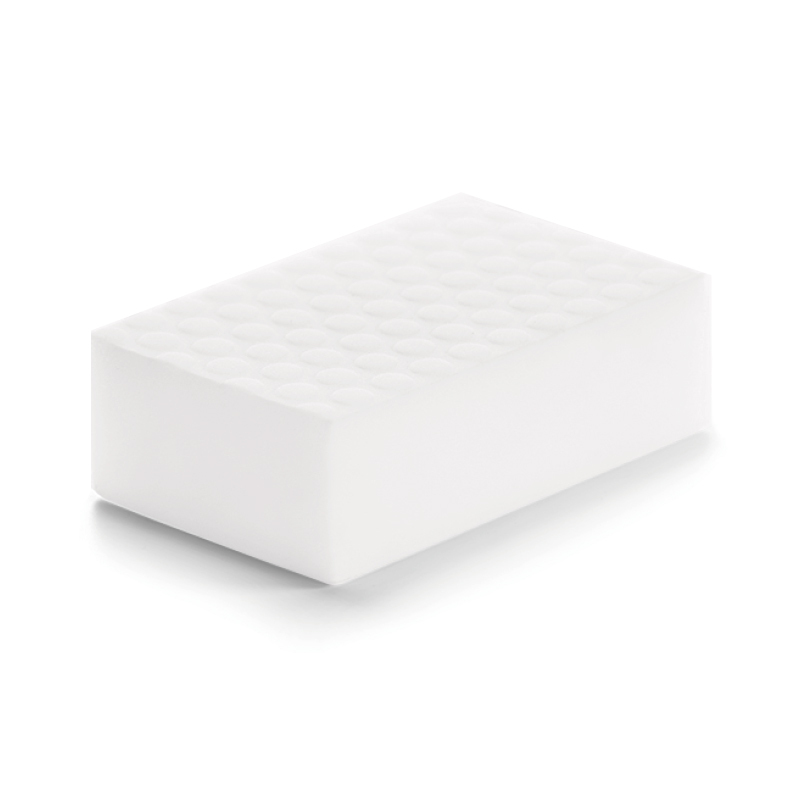
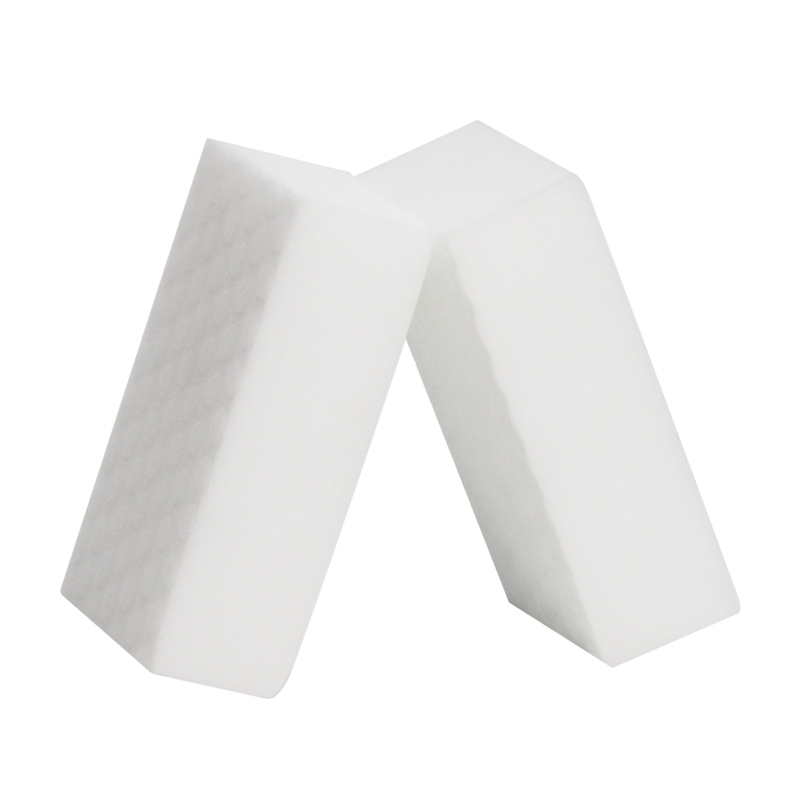
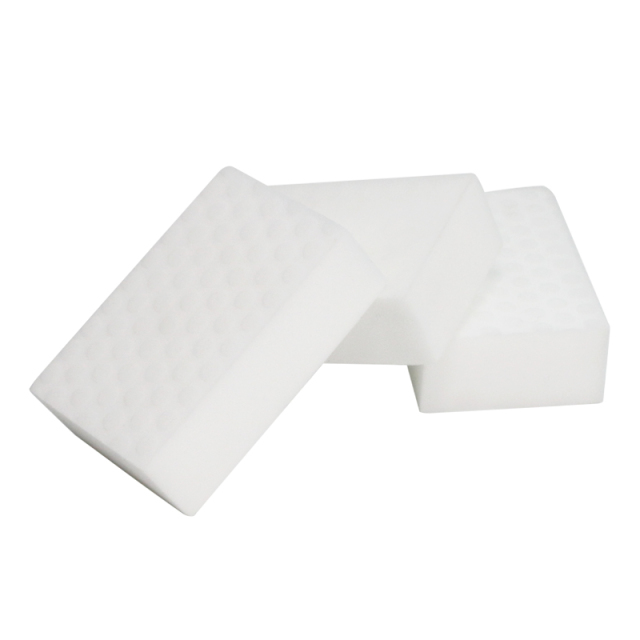
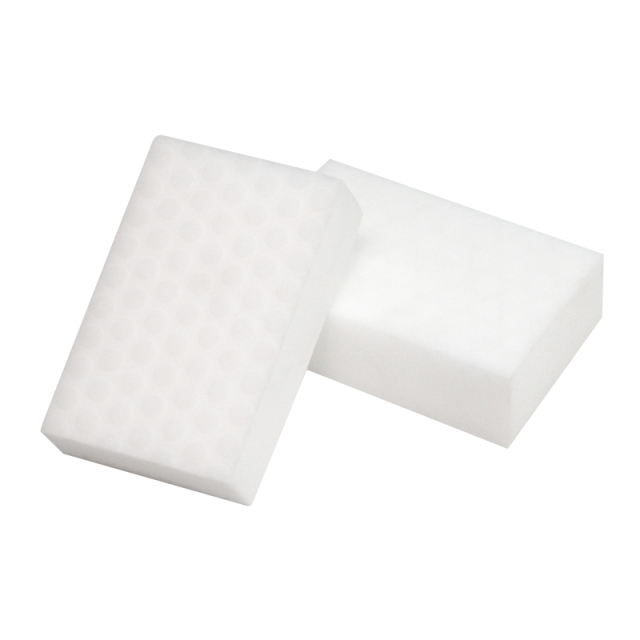
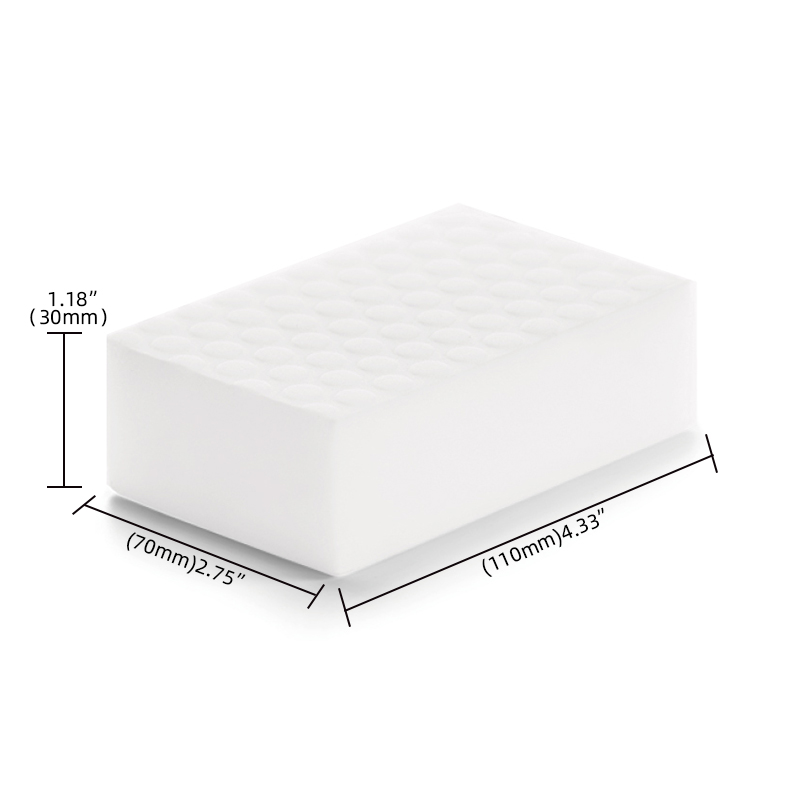
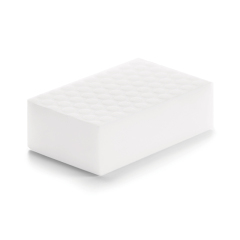
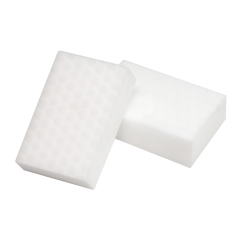
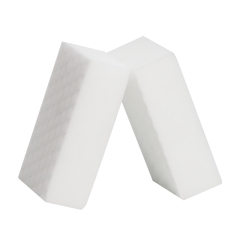
The Nano Magic Sponge is a white melamine cleaning sponge, cut rectangular and sized to sit in one hand. Wet it, squeeze most of the water back out and wipe: it takes scuff marks, tea and coffee tannin, soap film, marker and light oxidation off hard surfaces with nothing added to the water.
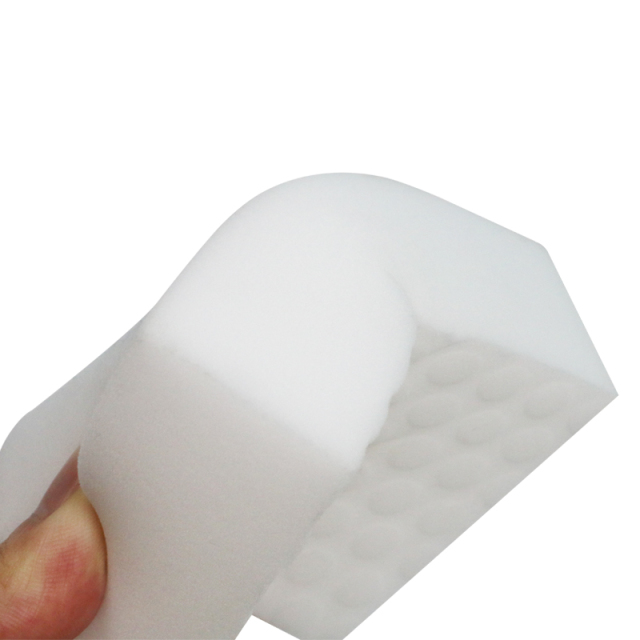
That makes it the first pass in a great many jobs. Instead of reaching for a spray, a cloth and a brush to deal with a mark on a door card or a worktop, a technician wipes it once and moves on — no dwell time, no rinse bucket, and nothing left drying on the surface. The block abrades in the same way a very fine paper would, but it is soft enough to follow a contour and thin enough to reach into a moulding.
Detailers keep a stack on the trolley, cleaning wholesalers list it beside cloths and scourers, and household buyers pick one up for the sink. As a melamine sponge supplier, we keep the block small, light and flat to store, and it needs no explanation at the shelf.
How the Foam Lifts Dirt
Melamine foam is an open-cell material: a rigid skeleton of very fine strands with air in between. Damp, those strands behave like an extremely fine abrasive — fine enough to take off what is sitting on a surface without cutting into the surface itself, which is why the same block can clean a fired tile glaze and a textured plastic trim. That eraser principle is what every nano magic sponge eraser is built on — the standard a nano magic sponge manufacturer has to hold — and it is why water does the whole job.
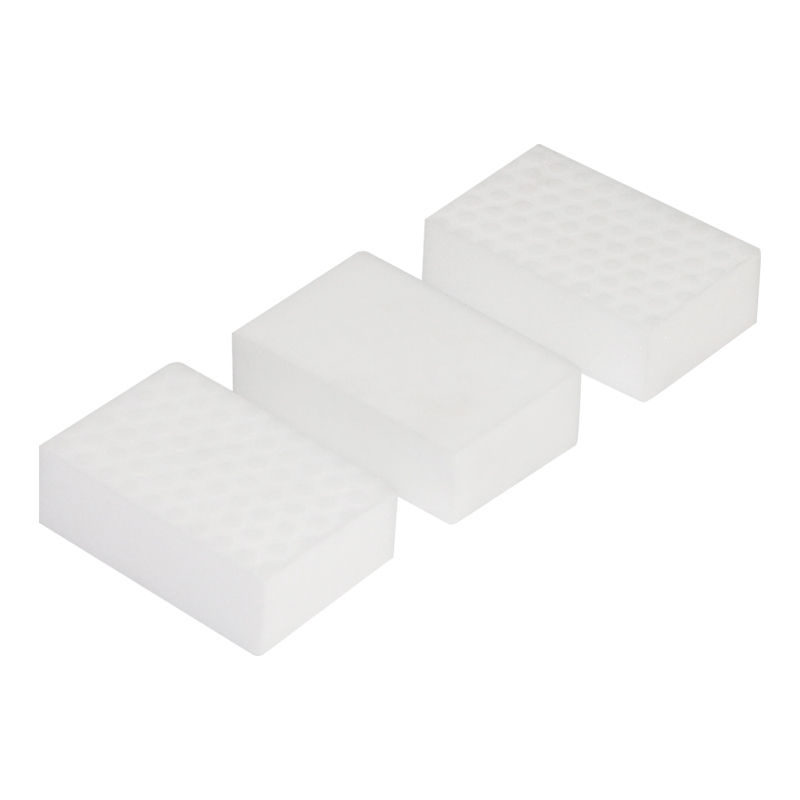
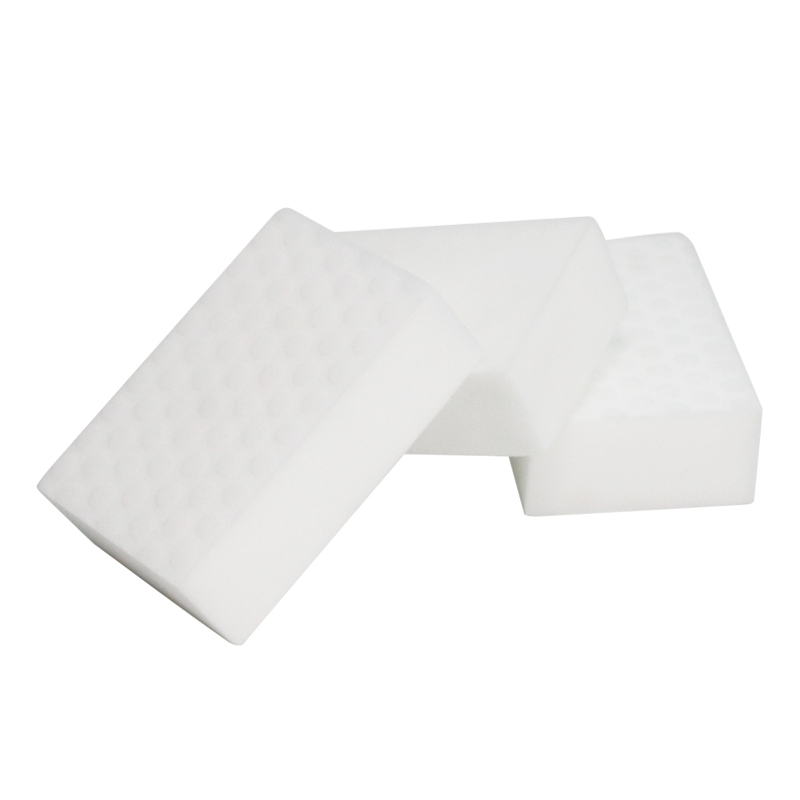
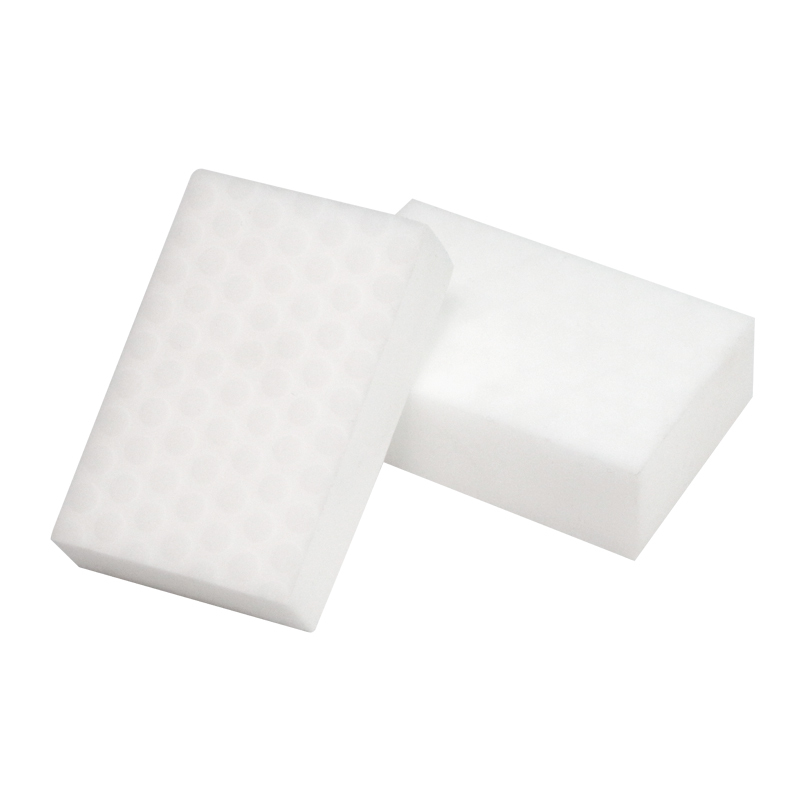
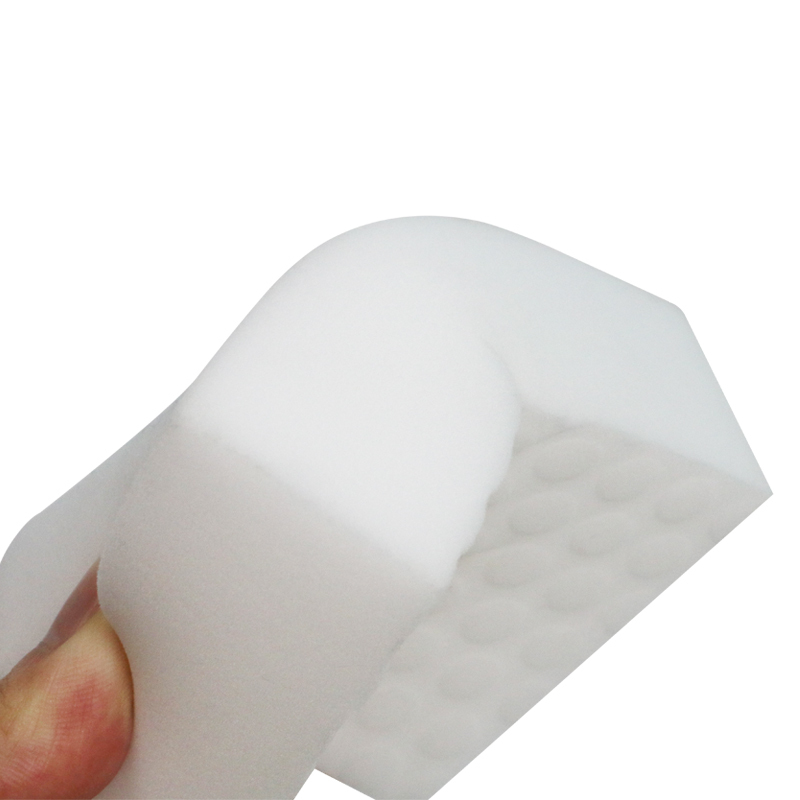
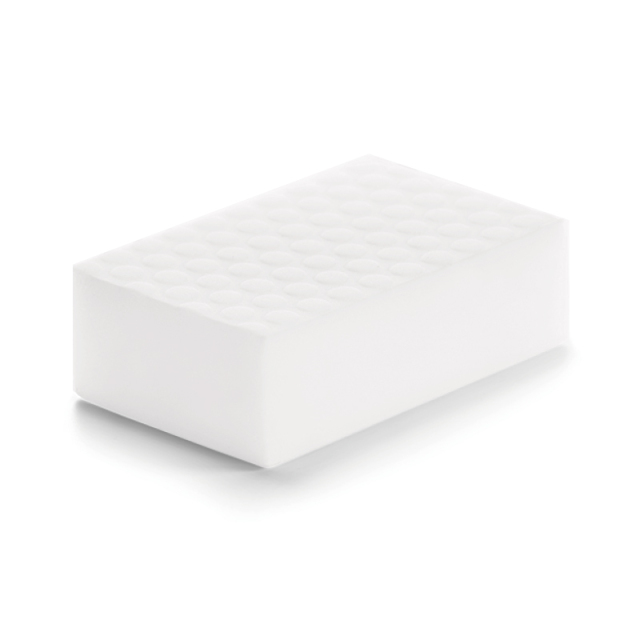
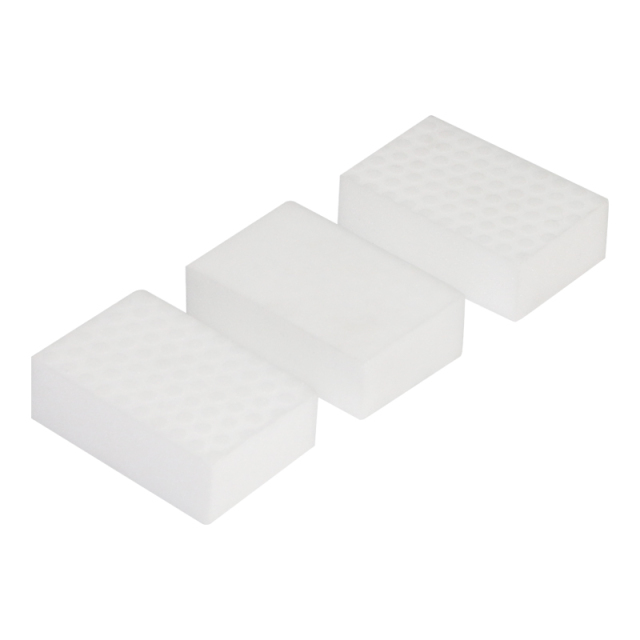
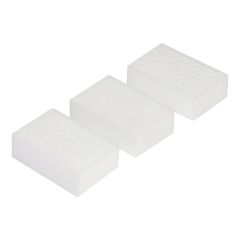
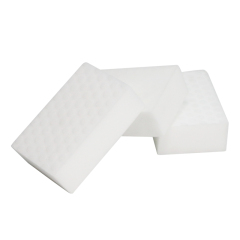
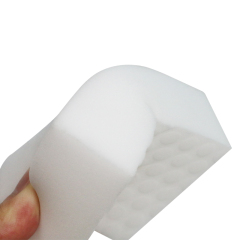
The dimpled face is not decoration. The pattern gives the block somewhere to trap what it removes, so dirt is carried away instead of being smeared across the panel, and it keeps a little water in contact with the surface. The smooth sides are the reserve — once the dimpled face has flattened, cut the block back and carry on with a fresh edge.
What the foam does not do is dissolve grease. It lifts pigment, tannin, oxidised film and dried residue; a tacky oil film still needs a detergent to break it, and wiping the block over grease only loads the face and smears the film wider. Degrease first, then take the mark off with the block.
Cleaning Scope
- Ceramic — bowls, dishes, tableware, tea sets, sanitary fittings, mosaic tiles and glazed wall tiles. Worked damp and lightly, a nano sponge for ceramic tiles lifts tea tannin, limescale haze and soap film off the glaze while leaving the shine underneath intact.
- Plastic — desk and chair shells, shower-room panels, PVC windows and doors, slippers, ash bins and toys. The foam gets into the moulded grain that a cloth slides over, which is exactly where scuffs and hand grime sit.
- Office equipment — computer casings, printers, duplicators and fax machines. Wipe around vents, seams and keytops with a well-squeezed block and keep water out of the openings.
- Home appliances — televisions, iceboxes, washing machines, air-conditioners, microwave ovens and electric cookers. It is the quick answer to a baked-on ring on a cooker top or finger marks on a fridge door.
- Glass — glass doors and windows, ornamental glass, vases, lamps and lanterns. Keep it to frames, edges and hard-water marks, and leave coated, tinted or filmed panes to a cloth and a glass cleaner.
- Leather — car seats and interior trim, leather furniture, bags and shoes. Keep the block barely damp and the pressure light; this is the magic sponge for car cleaning that lifts dye transfer from a seat bolster without reaching for a leather cleaner.
- Hardware — locksets, sockets, wire and metal fittings. It pulls paint transfer and grime out of the grain before a dry cloth finishes the job.
Car Detailing Applications
- Interior trim and door cards — shoe scuffs, sun cream and dried coffee come off textured plastic in a few passes, and the panel is dry before the next car rolls in.
- Leather seats and bolsters — a barely damp block with light pressure lifts dye transfer from denim; wipe dry straight away and follow with a conditioner if the hide looks dry.
- Wheels and tyre sidewalls — whitewall bloom, brake dust on the rim face and grime in the tread shoulder. Keep the block away from painted, polished and diamond-cut rims.
- Badges, grilles and emblems — squeeze the block thin and work around the lettering, where a full-size block is too bulky to reach.
- Glass surrounds and pillar trims — the black plastic around a windscreen collects polishing residue and water spotting that a cloth simply pushes around.
- Pre-delivery and used-car reconditioning — on a trade-in interior where speed matters more than a deep clean, one magic sponge for car cleaning saves a whole spray-and-brush step.
Kitchen, Tile & Bathroom Jobs
Kitchen — Household and janitorial buyers know it as a kitchen magic cleaning sponge, and the kitchen is where most of the repeat volume sits for a nano magic sponge manufacturer. It takes the brown ring out of a stainless sink, lifts tea and coffee staining from cups and teapots, cuts through splashback grease that has gone tacky, and clears the haze on an oven-door glass. Work the block damp, rinse it often, and wipe the surface down with a clean cloth afterwards so nothing dries on the worktop. Keep it off non-stick coatings, lacquered cabinet fronts and brushed or anodised finishes that show a scratch.
Bathroom & Tiles — Limescale haze on a shower screen, soap scum on wall tiles, grout lines that have gone grey and the film inside a basin all respond to the same pass. A nano sponge for ceramic tiles is why one block covers both the kitchen splashback and the bathroom screen instead of two separate products: the fired glaze is hard enough to take the fine abrasion, and the foam follows the profile of the tile rather than skimming over it. Keep it off polished marble, dark slate, polished porcelain and any tile with a hand-painted or soft satin finish.
Sizes & Key Specifications
| Item reference | No.T-653 |
| Material | Melamine foam |
| Form | Rectangular block |
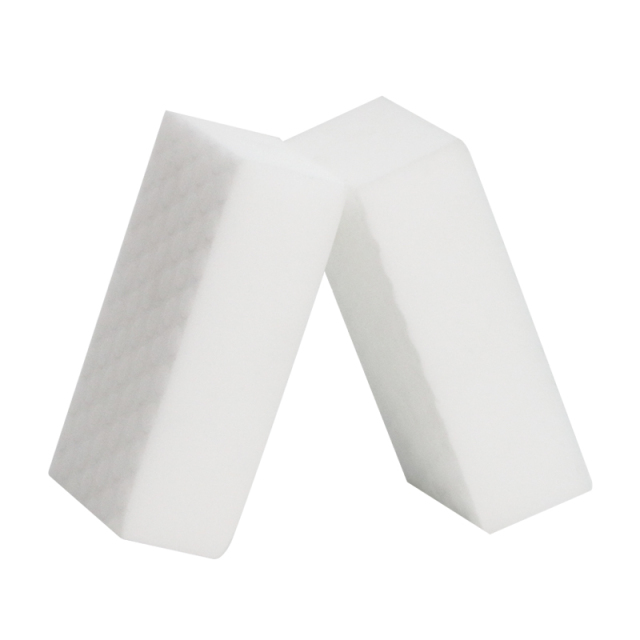
| Block dimensions | 110 mm × 70 mm × 30 mm (4.33 in × 2.75 in × 1.18 in) |
| Working face | Dimpled texture on one face |
| Sides | Smooth cut |
| Colour | White |
| Finish | Matte, porous |
| Cleaning agent | Water only |
| Handling | Damp wipe, light pressure |
| Service life | Consumable — the foam wears down as it cleans |
Using & Caring for the Sponge
- Soak the block in clean water for a few seconds, then squeeze it out until it stops dripping.
- Test an inconspicuous area first — a corner of the panel, the underside of a tile, the back of a seat.
- Wipe in straight passes with light pressure and let the foam cut; pressing harder wears the block out faster without cleaning any better.
- Rinse the block as it loads up — a grey, gritty face smears dirt and can drag grit across the surface.
- Wipe the surface with a damp cloth afterwards, then dry it, so the fine residue the block leaves behind is not left to dry on.
- Cut the block down for narrow work — around badges, between grout lines, into window channels; a fresh cut edge bites better than a worn face.
- Squeeze the melamine cleaning sponge out and let it dry after use; a block left standing in water goes soft and crumbles early.
- Retire it once it has flattened to a thin sliver — the material has done its work by then.
Wholesale & Repeat Demand
Two shelves, one block — A car care distributor shelves it beside interior cleaners and tyre dressings; a household or janitorial wholesaler lists it with cloths, scourers and mop heads. The same block sells in both, so one line and one carton can cover two aisles in a mixed catalogue. Because it wears out, it comes back on the next order — the replacement cycle is the product, and that is what earns it a permanent slot rather than a seasonal one. We cut and pack this line ourselves, which is what a nano magic sponge manufacturer can hold across repeat orders: the block you approve is the block that ships on the third and fourth order. Density is the one that shows up later — a light, open block cleans well for a minute and then collapses.
Sampling & Packaging Approval
- Send the brief — destination market, sales channel, expected quantity, the pack format you sell in, and any label or artwork you already hold.
- Approve the block itself: density in the hand, squareness of the cut, depth of the dimple, and how it behaves when it is wet and squeezed.
- Test it on your own surfaces, at your own water hardness and pressure, and record what you tested so the result can be compared later.
- Approve the packaging — flow wrap, printed sleeve, header card or plain export carton — and sign off the artwork proof, label language, barcode and carton marks before anything is printed.
- Seal the approved sample and keep it as the reference for the bulk run. Magic sponge wholesale orders move quickly once that reference exists, because product, print and packing have all been settled in one pass.
- Re-confirm the approved version at dispatch, so the cartons that arrive match the sample that was signed.
Ordering, Shipment & After-Sales
- In stock and fast shipping — we confirm availability against your quantity and destination before the order is released, and give you a dispatch date rather than leaving it open.
- Quantity and price — minimum order quantity, pack size and price break are quoted per item and per destination, so ask for the quote against the volume you plan to hold rather than for a single carton.
- Deposit and balance — the payment schedule is set out in the quotation; confirm the balance date with your sales contact so the shipment is not held at the last step.
- Shipping documents — commercial invoice, packing list and transport documents travel with the goods, and we confirm in advance which test report, safety data sheet or market-specific document your importer needs.
- After-sales and batch traceability — each carton carries a batch reference from the run that packed it, so a question reaches the production record instead of stopping at the warehouse; report a shortage, a crushed carton or a quality issue with the batch number, the quantity affected and clear photographs.
- Production traceability — block, pack and batch record come from the same production run.
- Mixed and repeat orders — detailing consumables, chemicals and a kitchen magic cleaning sponge line can be quoted together, so a whole shelf arrives on one set of documents instead of three.
- Before you commit — ask for packed weight, carton configuration and a sealed sample; a melamine sponge supplier who answers those three quickly is the one worth a second order.
Scale & Supply Capability
SURAINBOW is run by Guangzhou Liangdian Automotive Supplies Co., Ltd., a factory-trade operation set up in Guangzhou in 2010 and now 50 people strong. Sixteen years in car care have given us a one-stop supply position: our own SURAINBOW lines are held in stock for fast shipping, and an associate factory with modern production equipment and an established quality management system keeps replenishment moving. We take OEM and ODM work and our R&D team develops to your specification. Buyers in the Middle East, the United States, Southeast Asia, Europe, the UK, Russia, Africa and Australia already order from us.
FAQ
Does the sponge need a cleaning chemical?
No — water is the whole system. A nano magic sponge eraser works by fine abrasion from the foam itself: dampen it, squeeze it out and wipe. Add a detergent only where you would use one anyway, such as a greasy splashback, and keep the dilution light. Rinse the block and the surface with clean water afterwards so no residue dries on.
Will it dull a gloss, lacquer or anti-glare finish?
On hard, glazed and matte surfaces the finish is left as it was found. On high-gloss lacquer, piano-black trim, anti-glare screen coatings and satin paints it can leave a haze, because the foam is a fine abrasive by design. Keep the pressure light, stop as soon as the mark lifts, and on a soft clear coat use a cloth and a chemical cleaner instead.
Are all melamine blocks the same?
No, and the differences show up over time rather than in a photograph. Density, cell size, how square the cut is and how deep the dimple runs all change how the block bites and how long it lasts. When you compare offers from one melamine sponge supplier with another, ask for packed weight and a sealed sample, then test both on the same surface.
Can one block cover a whole kitchen and bathroom rotation?
It covers a good deal of it. As a kitchen magic cleaning sponge it handles sink staining, cup and teapot tannin, splashback grease and oven-door glass; in the bathroom the same block takes limescale haze off a shower screen and soap scum off wall tiles. Keep a separate block for heavy grout work, since grit picked up there should not travel back to a worktop.
Can I use it on the car's paintwork?
No. This is a magic sponge for car cleaning aimed at trim, leather, wheels and the surrounds around glass, not at painted panels. The foam is a fine abrasive, and on clear coat, matte paint or a satin wrap it will leave a haze that has to be polished out. Bodywork belongs to a wash mitt and shampoo.
Can we sell it under our own brand?
Yes. The block can carry your own label and printed sleeve instead of ours, and the artwork is proofed and approved before printing. Send your label content, barcode data and the language version for your market, and magic sponge wholesale orders are then produced against that approved proof.
Is the foam consistent from one batch to the next?
The approved sample is kept as the reference for later runs, so each batch is checked against the same standard. Check the sealed sample against the bulk carton on arrival, and note the batch reference on the carton if anything looks different.
Will it scratch a ceramic tile glaze?
Glazed ceramic is one of the surfaces it handles most effectively — a nano sponge for ceramic tiles works on the fired glaze, lifting tea tannin, limescale haze and soap film without dulling it. The risk is the finish around the glaze rather than the glaze itself: polished porcelain, hand-painted decoration and soft satin glazes mark more easily and are better served by a cloth and a pH-neutral cleaner.