Product Overview
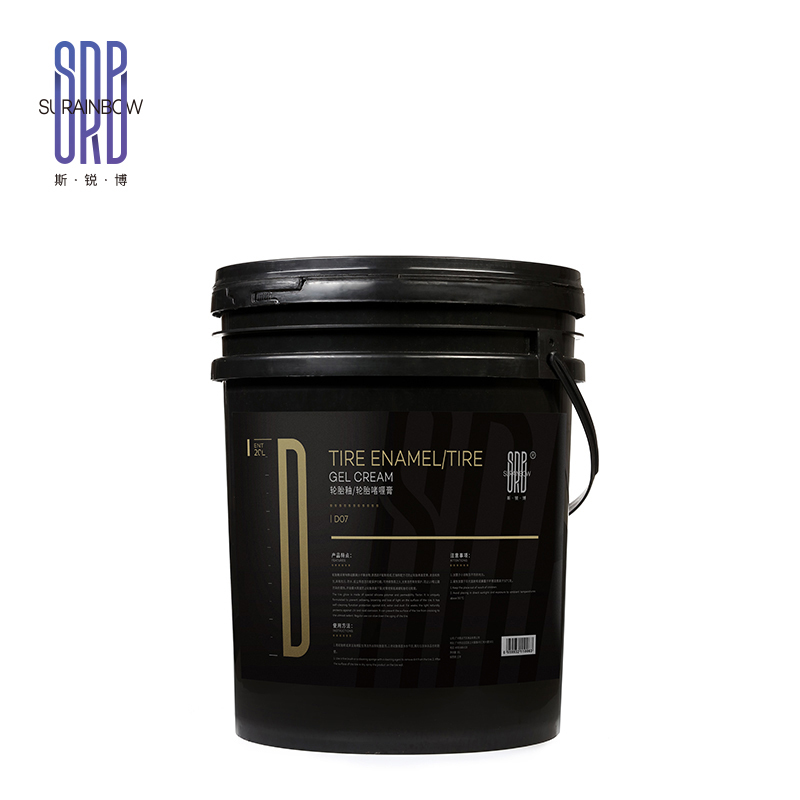
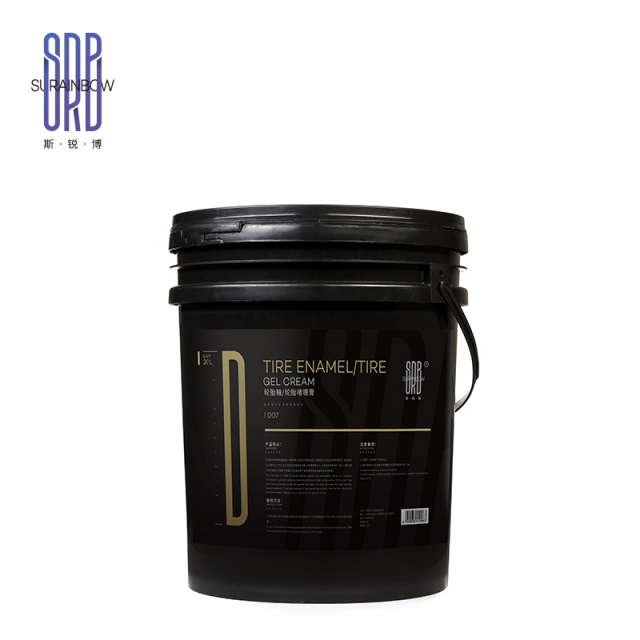
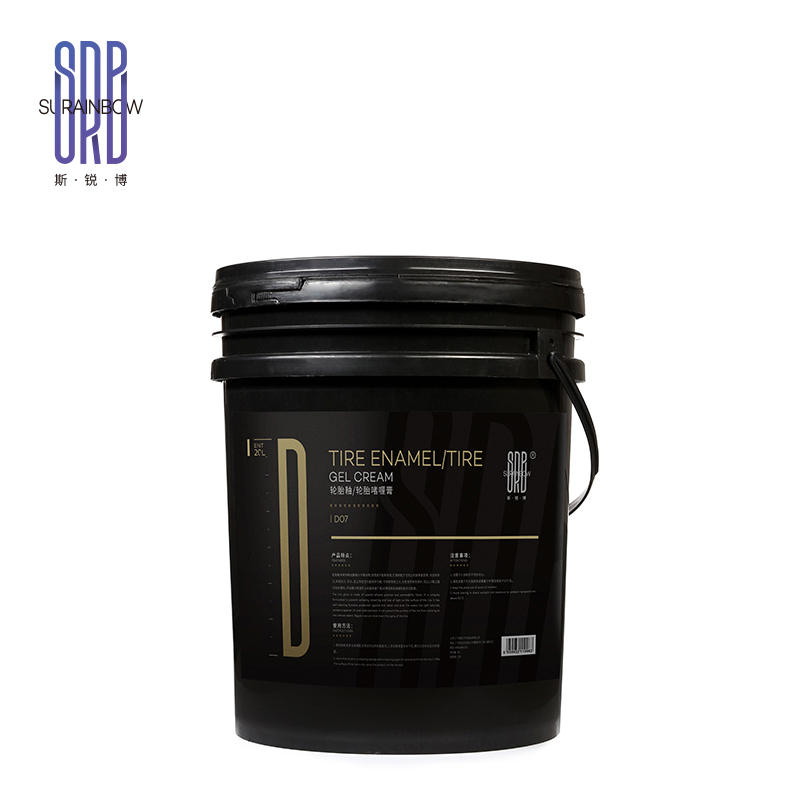
Tire Buffer Gel Grease is a hand-applied dressing for black rubber sidewalls, sold under the SURAINBOW label as a bucket of tire enamel gel cream and listed as No. D-07. The formula is built on a silicone polymer with a permeability factor, which is the part that matters in use: the polymer is carried into the rubber rather than left sitting on it as a wet film, so the sidewall reads as conditioned black instead of a shiny coat that washes away. The job it is built for is specific — prevent yellowing, browning and loss of gloss, hold off dirt, water and dust with a self-cleaning surface, and resist UV and road corrosion between washes.
Application is by hand: gel on a sponge or foam applicator, a thin even coat worked into the lettering and the shoulder, a few minutes to settle, then a buff with a dry towel. That sequence is what separates a dressed tire from a greasy one, and it is why the gel is used as the last step of a wash-and-dress job rather than as a quick pass. Detail bays finish a forecourt-ready vehicle with it, distributors and importers stock it as a repeat line beside tire shine spray, wheel cleaner and applicators, and fleet and pre-delivery operations use it where a yard of sidewalls has to look consistent by morning. It is a dressing and a protectant, not a repair: regular use slows surface cracking and aging, and nothing in a bucket will bring back a tire that has already perished.
Colour Retention & Protection
- Anti-yellowing and anti-browning. The formula is designed around the two ways a dressed sidewall ages badly — a yellow-brown cast, and a dull grey that looks like bare rubber — and around holding gloss instead of letting it fade out.
- Self-cleaning surface. Dirt, water and dust are held off the dressed rubber, so a tire that has been through a rainy week comes back closer to how it left the bay instead of going matte and dusty.
- UV protection. In markets where the sun does the damage — the Middle East, Southeast Asia, southern Europe, Africa and Australia — a dressed sidewall keeps its colour far better than bare rubber, and the dressing itself is made to resist UV rather than break down under it.
- Road corrosion. Brake dust, diesel film, salt and grime stay at the surface, which is the difference between a tire that cleans up with shampoo and one that needs a strong wheel cleaner every time.
- Cracking resistance and slower aging. The film is aimed at preventing the sidewall surface from cracking as far as the formulation can, and at slowing the aging of the tire with regular use. It slows that process; it does not reverse it.
- A tire polish with protection behind it. Most tire polish is bought purely for appearance; this one carries the UV and road-corrosion barrier in the same pass as the gloss.
- An easy line to sell on repeat. A sidewall is one of the few surfaces a customer judges from ten metres away, which makes a dressing that keeps its colour one of the simpler tire shine products for a distributor to keep on the shelf.
Sidewall Preparation & Application
- Clean the tire first. A wheel and tire cleaner plus a stiff brush, a thorough rinse, and then time to dry — a dressing applied over dirt or trapped water dries patchy and browns early.
- Work on a cool tire in the shade. Rubber that is hot from the road or standing in direct sun pulls the gel in unevenly, so let the vehicle cool or pull it into the bay before you start.
- Load the applicator, not the tire. A small amount on a foam applicator or a folded sponge gives you control; gel put straight onto the sidewall runs onto the tread and the wheel face.
- Work it in with the curve of the tire. Firm, overlapping passes, pressed into the lettering and the shoulder grooves, with the coat kept thin and even instead of heavy in the middle of the sidewall.
- Let it settle, then buff. A few minutes of dwell, then a dry microfiber over the whole sidewall — the buff is what takes off the surplus that would otherwise sling onto paintwork.
- Add a second thin coat only for more gloss. One coat reads as a satin dress, two read as a wet gloss; a single heavy coat is what runs, streaks and slings.
- Keep it off the tread and away from the brakes. Grip comes from clean rubber, and a dressed tread patch is a real problem on a wet road; the same care applies around calipers, discs and wheel weights. A gel also stays where it is put, so there is nothing drifting across the wheel face to mask off first.
- The gel has a thick, cream-like body. Unlike a liquid tire polish it does not flash off; it stays workable long enough to be pushed into the grain, the lettering and the shoulder, which is where a thin liquid usually leaves the sidewall looking patchy. Coverage is generous — a small amount on the applicator spreads across a full sidewall — and the behaviour changes with the rubber: a new or well-kept tire takes one thin pass, while a dry, sun-bleached sidewall absorbs more and needs a second thin coat before the colour comes back even. Working in the shade, on a cool tire, is what keeps the coat from grabbing and drying in streaks. Around the rest of the vehicle the gel stays where it is put. It is slower to apply than a tire shine spray, and on a high-volume wash that difference is real — but the coat is deliberate, it can be built where the rubber is dry or scuffed, and the wheel does not have to be masked first. The same gel brings grey rubber trim, mud flaps and bumper inserts back to black, which is often the cheapest visual improvement on an older vehicle. Applied too heavily it will feel tacky and collect dust, so thin coats and a dry buff are the rule; between uses, close the lid fully so the surface does not skin over and keep the bucket out of direct sun.
Applications & Vehicle Types
- Passenger cars and SUVs. The closing step of a wash-and-dress package: the vehicle leaves with a tire shine the customer can see from across the lot, and the technician has spent minutes rather than hours on it.
- Dealership pre-delivery and used-car forecourts. A row of cars has to look consistent by opening time, and a buffed coat on each set of wheels is one of the quickest ways to lift a line of trade-ins.
- Vans, light trucks and semi-truck tires. Big sidewalls take the most UV and the most road grime and are the most visible part of a commercial vehicle; fleet operators who buy tire shine wholesale for a depot work it into the scheduled wash cycle rather than treating it as a showroom extra.
- Off-road and 4x4 vehicles in dusty markets. The self-cleaning surface matters more here than the gloss — a tire that sheds dust still looks dressed several days after the wash.
- Motorcycle, scooter and delivery-fleet tires. Sidewalls only, applied with a small sponge and kept well clear of the tread; delivery fleets running in wet weather are the classic case for a neat, buffed finish that does not run.
- Distributors and importers building a tire-care shelf. If you source from a tire shine supplier for a region, this is the item that anchors the shelf next to wheel cleaner, applicators and shampoo.
- Grey rubber trim and bumpers. Arch liners, mud flaps and bumper inserts take the same gel on a sponge, which turns one bucket into two jobs.
Specifications
| Product name | Tire Buffer Gel Grease |
| Product code | D-07 |
| Brand | SURAINBOW |
| Form | Gel cream |
| Base | Silicone polymer with a permeability factor |
| Finish | Gloss, buffable to satin |
| Colour-change resistance | Anti-yellowing and anti-browning |
| Protection | UV and road corrosion |
| Application | By hand with a foam applicator or sponge |
| Dilution | Supplied as a gel cream, applied neat |
| Suitable surfaces | Tire sidewalls, rubber trim, mud flaps, bumper inserts |
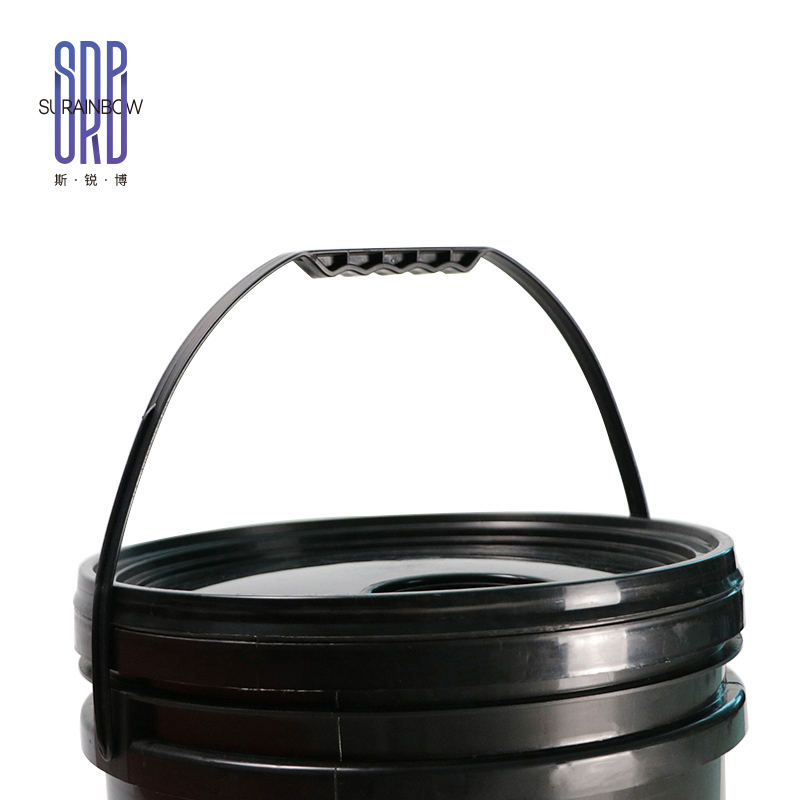
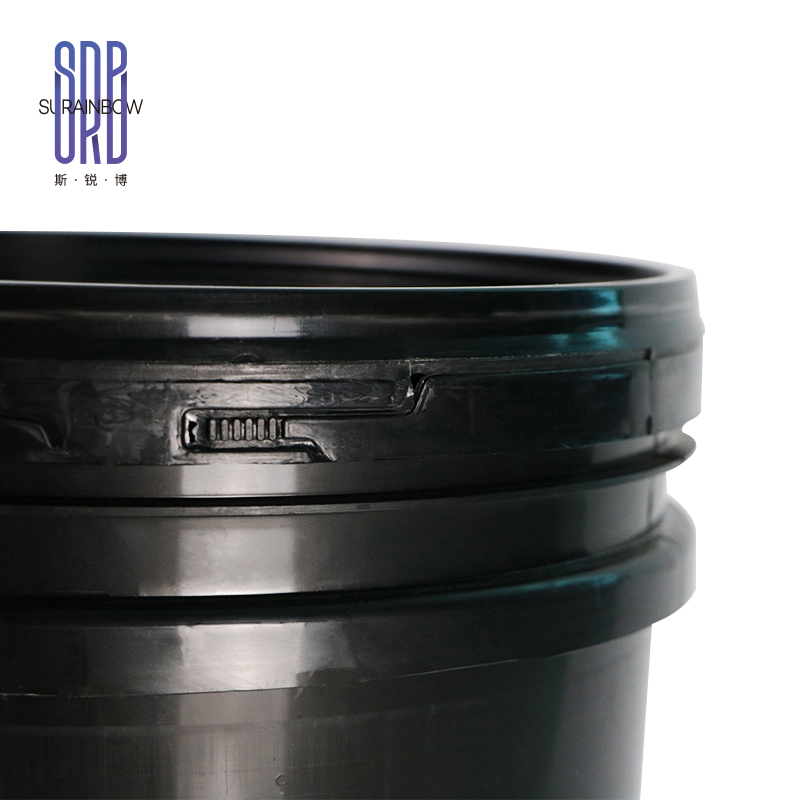
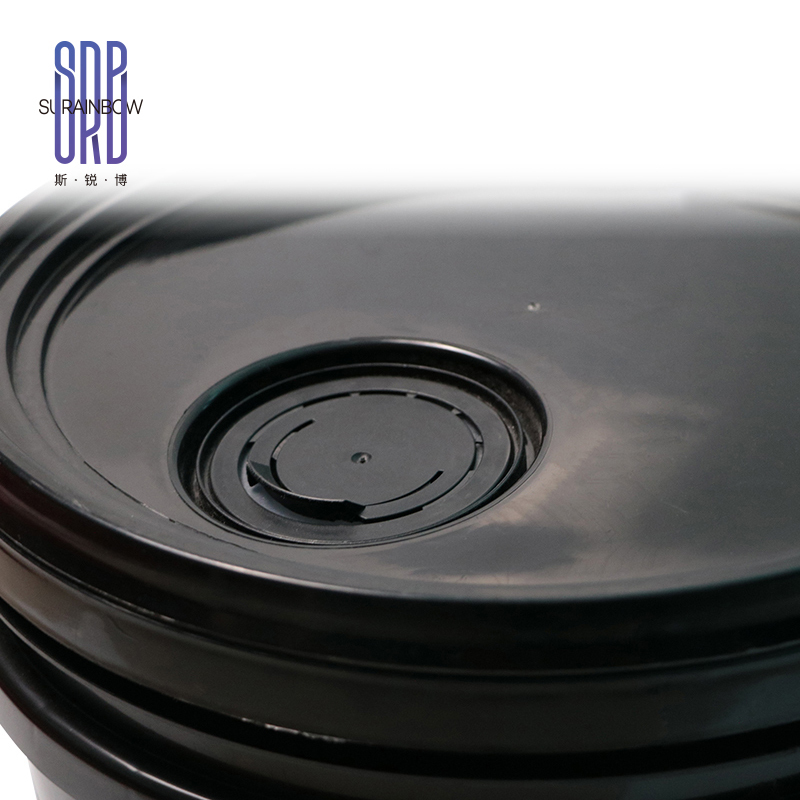
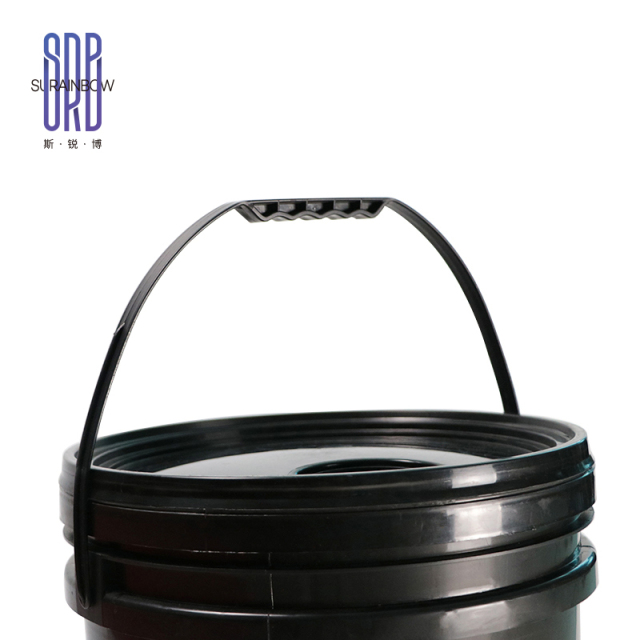
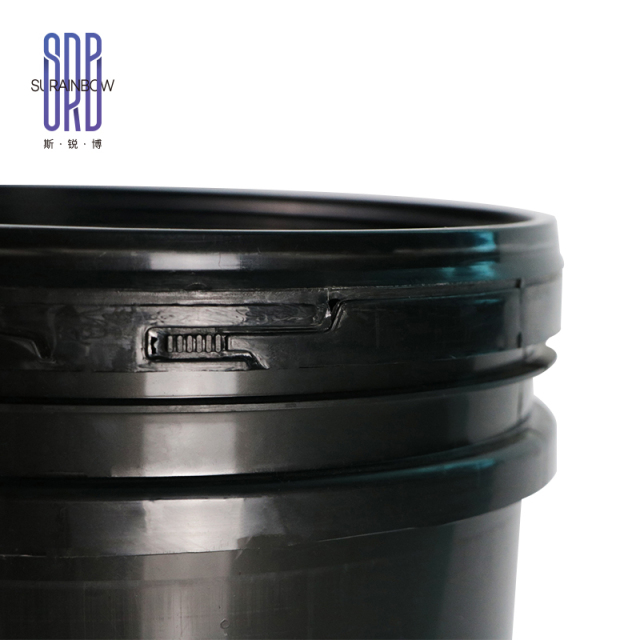
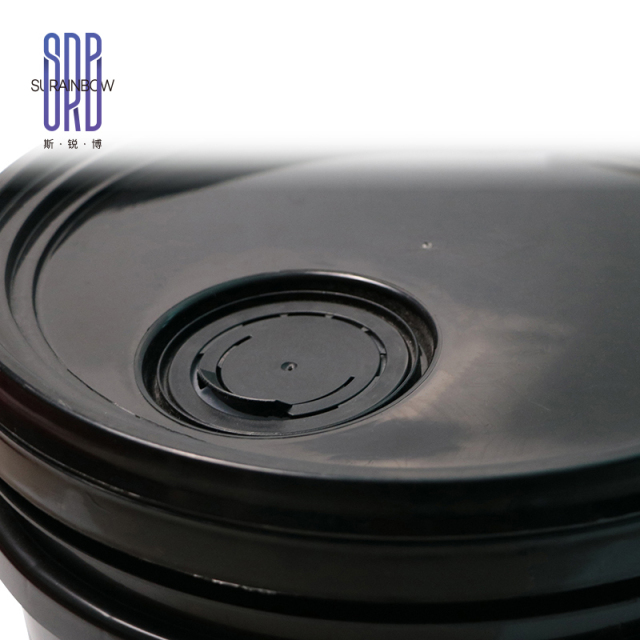
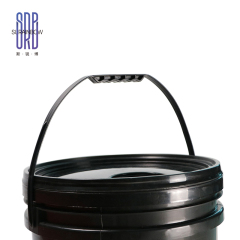
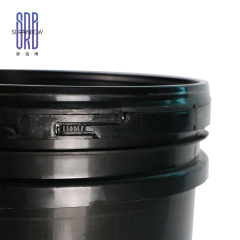
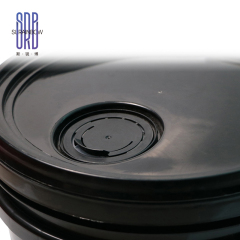
| Packaging | Black plastic bucket with a snap-on lid and locking tab |
Ordering & Delivery
- Send the pack and the market. Tell us the bucket size you want, the label language and the destination country. As a tire shine supplier working with importers and distributors, we build the quote from those details plus the quantity, so the offer matches what you will actually ship.
- Approve a sample on your own tires. Ask your sales contact about sample availability and the scope of the evaluation, then test the gel on the sidewalls you actually work with, in the finish you intend to sell, and record the conditions and the result you accept. A sealed, signed sample becomes the reference the bulk order is checked against.
- Proof the packaging before print. Bucket, lid, label artwork, barcode and language versions are reviewed as a proof, and the approved proof is what the production run is matched to. If the label will carry your own trademark, have the artwork and the authorisation ready at this stage — and if the gel is shipping alongside other tire shine products in one container, list them now so the carton marks and the paperwork are consolidated.
- Confirm the order and the production slot. Tire shine wholesale pricing, the minimum order quantity and the schedule are confirmed in the quotation rather than assumed: the minimum order quantity depends on the pack, the label and the destination, and a stock-label order does not follow the same timetable as a private-label run.
- Pay the balance and ship. Standard packs are held in stock and fast shipping follows once the balance, the shipping method, the consignee details and the carton marks are confirmed. Carton and pallet configuration is agreed with the quote so the container plan and the export paperwork stay aligned.
- Take the documents with the goods. We prepare safety data sheets, a certificate of analysis, an ingredient declaration where your market asks for one, GHS label information, the commercial invoice, packing list and customs documents for the shipment. Confirm the exact set at quotation stage — the importer carries the local registration and labelling obligation — and ask which performance test documentation is available for the UV and road-corrosion claims.
- Keep the batch number for after-sales. Every shipment is traceable to its production batch. Report leakage, shortage or packaging damage within 7 days of receipt and any quality concern within 30 days, with the batch number, the affected quantity and photos or video, so it can be checked against the approved sample and the retained record.
Scale & Supply Capability
SURAINBOW is run by Guangzhou Liangdian Automotive Supplies Co., Ltd., a factory-trade operation set up in Guangzhou in 2010 and now 50 people strong. Sixteen years in car care have given us a one-stop supply position: our own SURAINBOW lines are held in stock for fast shipping, and an associate factory with modern production equipment and an established quality management system keeps replenishment moving. We take OEM and ODM work and our R&D team develops to your specification. Buyers in the Middle East, the United States, Southeast Asia, Europe, the UK, Russia, Africa and Australia already order from us.
FAQ
How is this different from a tire shine spray?
A spray is a thin liquid carried onto the rubber and usually wiped once; this is a gel cream that is worked in by hand and then buffed. The difference shows up in control and staying power — nothing drifts onto the wheel face, the glass or the brake disc, the coat can be built where the sidewall is dry or scuffed, and the buffed film is what holds colour through the following washes. Where a spray suits a fast volume pass, the gel is what a shop reaches for when the vehicle is going onto a forecourt or into a handover.
Do I have to buff it off, or can I leave it wet?
Buff it. A coat left wet looks glossy for an hour and then collects dust, feels tacky to the next person who touches the car, and slings onto the bodywork within the first few miles. A dry microfiber passed over the whole sidewall after a few minutes takes off exactly the surplus that causes those problems and leaves an even finish rather than a patchy one. Use a clean, dry towel, turn it as it loads up, and keep a second towel for the second coat.
My tires go brown after a few weeks. Will this stop it?
Browning usually starts with preparation, not with the dressing. Oil, silicone residue from an old product, brake dust and trapped water sit on the sidewall and cure under whatever goes on top, so clean the tire, rinse it fully and let it dry before applying. On a properly prepared sidewall the formula is built to prevent yellowing, browning and loss of gloss, and it holds a tire shine that stays black rather than fading to grey over the following weeks.
Will it work on truck, van and off-road tires?
Yes. Anything with a black rubber sidewall can take it — vans, light trucks, semi-truck tires, off-road and agricultural tires, and motorcycle sidewalls. The larger the sidewall, the more it pays to work in sections and keep each coat thin, because a heavy coat on a big tire is where sling and patchy drying come from. Sidewalls only, though: leave the tread bare, and treat this as the finishing step alongside the rest of our tire shine products rather than as a cleaner.
How long does the gloss actually last?
The formula is built to hold for weeks under normal use, and what changes is the weather and the wash routine — strong sun, dust and frequent alkaline washes shorten it, while a garage-kept vehicle holds it longer. The bigger factor is preparation: a tire polish applied over a clean, dry sidewall holds noticeably longer than the same product over dirt. Most shops re-dress at every wash as part of the package, which is also where the slower aging of the rubber comes from.